Posted on

Diesel Engine Won’t Start: Causes and What to Check First

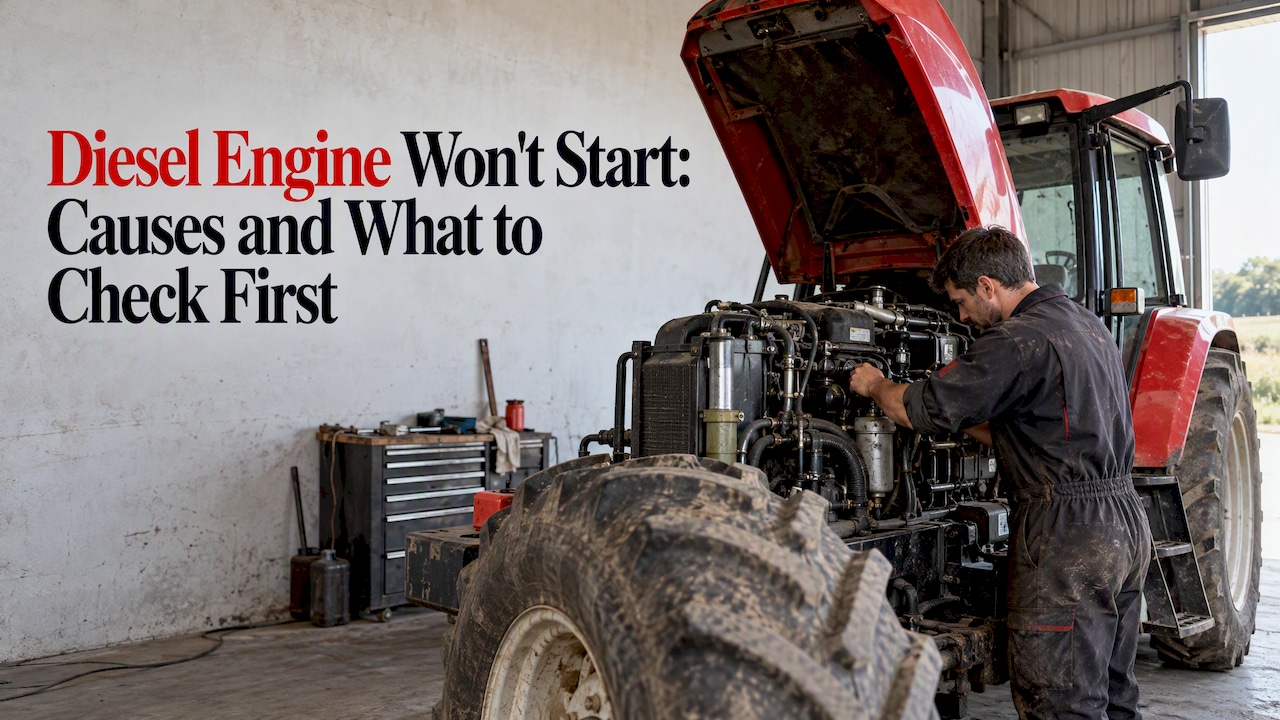
Red tractor with its diesel engine exposed

When a diesel engine won’t start, the cause is almost always one of three things: the engine isn’t turning fast enough, it isn’t getting fuel at the right time, or the air in the cylinder isn’t hot enough to ignite it. Listen to how the engine cranks first, then check fuel and air, then cold-start aids. That order saves time on a tractor, a generator, a compact excavator or a boat engine.

Iberspares

Iberspares.com

Find the Right Engine Parts

Iberspares supplies genuine Yanmar and Sensei engine components and filters for marine, agricultural, construction, industrial, and power generation equipment.

Explore genuine parts

TL;DR

  • Start with cranking: slow, clicking or silent points to the battery, cables or starter, not the fuel system.

  • If it cranks briskly but won’t fire, check fuel level, filters, air in the lines and the lift pump.

  • Cold weather makes starting harder because compression ignition depends on temperature at the end of compression, so glow plugs and heater circuits matter.

  • Never spray starting fluid into the intake, and keep crank attempts short.

  • Before ordering any part, note the engine model, serial number and part reference. Genuine Yanmar and Sensei parts are matched to those details.

Table of Contents

Why a diesel engine fails to start

A diesel has no spark. It relies on air heated by compression, then fuel injected at the right moment. A 2015 peer-reviewed review of diesel cold starting explains that ignition depends on the temperature reached at the end of compression. It also notes that fuel properties, lubricants, engine geometry and injection strategy all affect how easily the engine starts.

So every no-start comes down to one of these:

  • Not enough cranking speed: weak battery, poor connections, a tired starter or thick oil.

  • Not enough fuel, or fuel at the wrong time: empty tank, blocked filter, air in the system, a failing pump or injectors.

  • Not enough heat or compression: faulty glow plugs, worn rings or valves, restricted air intake.

Technical guidance for heavy diesels lists the same short set of common reasons: low fuel, air-inlet or exhaust restrictions, low cranking speed, defective fuel pumps or low compression. Check the simple, cheap items first.

Step 1: Listen to the crank

The sound tells you which branch to follow.

What you hear

Likely area

First checks

Silence or a single click

Battery, isolator, starter relay, starter

Battery charge, terminals, earth strap, safety interlocks

Slow, labouring crank

Battery, cables, starter, oil too thick

Voltage under load, corroded or loose connections

Fast, even crank, no firing

Fuel or heat

Fuel level, filters, air in lines, glow plugs

Fires briefly then dies

Fuel supply, air in lines, stop solenoid

Filter, lift pump, fuel valve, leaks on the suction side

Ford’s official guidance for a diesel that won’t crank is to look for dimming headlights, clicking, discharged batteries, and loose or corroded battery, earth, starter-relay and starter-terminal connections. It also says to confirm the transmission is in Park or Neutral, or the clutch is fully depressed. On machinery, the equivalent is any seat, lever or safety switch interlock.

A battery can show 12 V at rest and still collapse under load. Poor cables cause the same symptom. Clean and tighten connections before blaming the starter.

Step 2: Check the fuel system

If the engine cranks well but won’t fire, work through fuel in this order:

  1. Fuel level and tank valve. Gauges lie, and a closed shut-off valve on a boat or generator is a common oversight.

  2. Water or contamination. Look at the sediment bowl or drain the water separator if the engine has one.

  3. Filters. A blocked primary or secondary filter starves the engine. If service is overdue, replace the elements using the interval in your engine’s manual.

  4. Air in the lines. After a filter change or running dry, the system needs bleeding.

  5. Lift pump and injection pump. These are checks for a workshop if the earlier steps show nothing.

A clear hose on the suction side lets you see bubbles while cranking. Bubbles mean air is entering somewhere between tank and pump, usually at a loose fitting or a perished seal.

Bleeding after running out of fuel

Follow the manual for your engine. As an example of the general pattern, one manufacturer’s operation and maintenance manual tells the operator to open the fuel-tank valve and remove air with the manual pump. It also limits each start attempt to 10 seconds and recommends stopping after three unsuccessful attempts to look for the fault. Your engine may specify different figures, so use its own documentation.
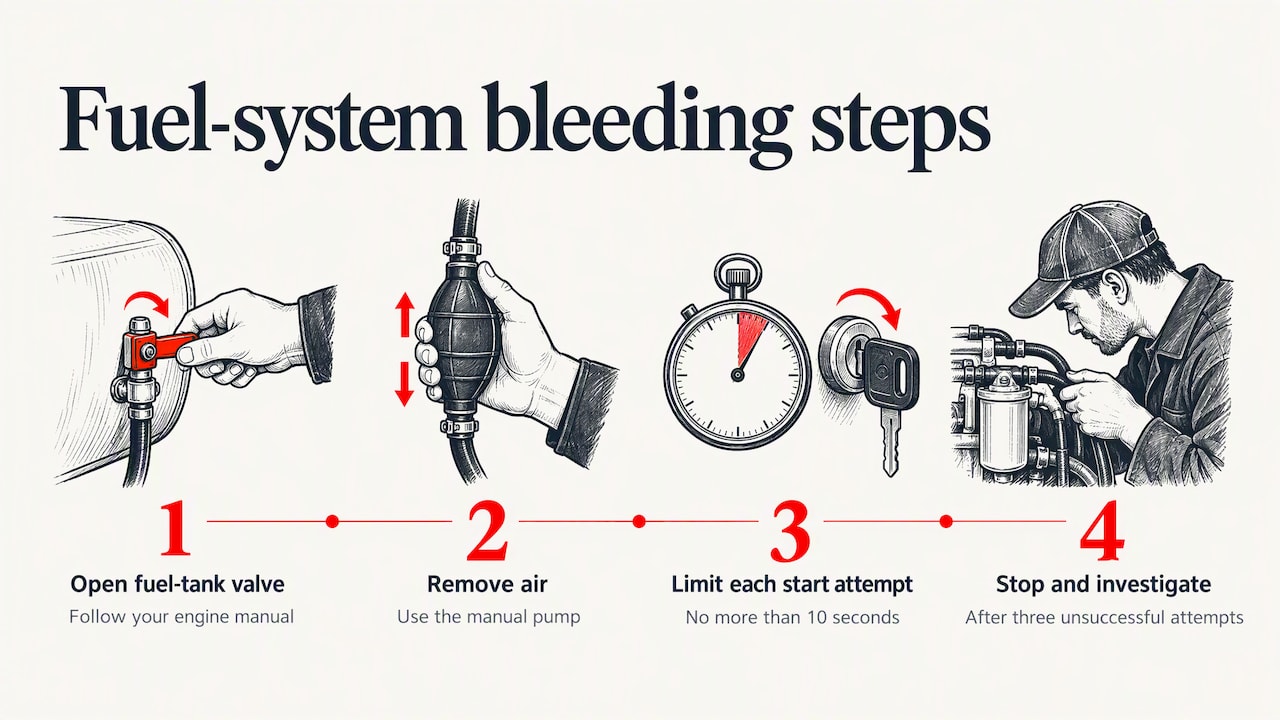
Example sequence for bleeding diesel fuel

Step 3: Cold-start aids and compression

When the engine is hard to start only when cold, suspect heat first. Glow plugs, intake heaters and their relays and timers all help raise the temperature in the cylinder. A failed set will not stop a warm engine starting, which is why the fault appears only on cold mornings.

Other cold-related causes include:

  • thick or wrong-grade oil that slows the crank

  • a battery that has lost capacity in the cold

  • fuel that has begun to gel or contains water

  • worn injectors that atomise poorly

If cranking, fuel and heating all check out and the engine still refuses, low compression is the next suspect. That is a job for a qualified technician with a compression test, not a roadside fix.

What not to do

  • Don’t use starting fluid. Ford’s guidance warns against putting ether or other starting fluid in the air intake. Some engines have intake heaters that make this dangerous.

  • Don’t crank for long periods. Ford advises no more than 30 seconds at a time, with a 30-second wait between attempts. Overheating a starter motor shortens its life.

  • Don’t add petrol to diesel fuel. The same guidance warns against adding gasoline, gasohol or alcohol. If petrol has gone into the tank, don’t start the engine. Have the tank drained by a professional.

  • Don’t loosen high-pressure fuel lines on a running or cranking engine. Common-rail systems work at very high pressure and need trained hands and the manufacturer’s procedure.

Marine diesels: what is different

A boat adds fuel tank sludge, water ingress, long periods of inactivity and shared battery circuits. A sailboat auxiliary diesel troubleshooting guide points to low compression or slow cranking, clogged filters, a defective lift pump and air in the lines. On older engines it also lists worn injection pumps or injectors and a faulty stop solenoid.

For a marine engine, add these checks:

  • Is the fuel cock open and the stop control fully returned?

  • Is the water separator clear, and is the raw-water side irrelevant to starting but worth checking once running?

  • Has the engine sat for months? Old fuel and a flat battery are the usual story.

Common-rail and electronic engines

Modern electronic engines add another layer. A 2026 Mercedes-Benz service bulletin on one engine family says the fuel rail has to reach a minimum pressure during cranking before the engine will start. It advises monitoring actual rail pressure with the manufacturer’s diagnostic tool and testing for internal leakage. The figure is specific to that engine. The principle applies broadly: if a modern engine cranks but doesn’t start, a diagnostic tool matched to the engine will tell you more than guesswork.
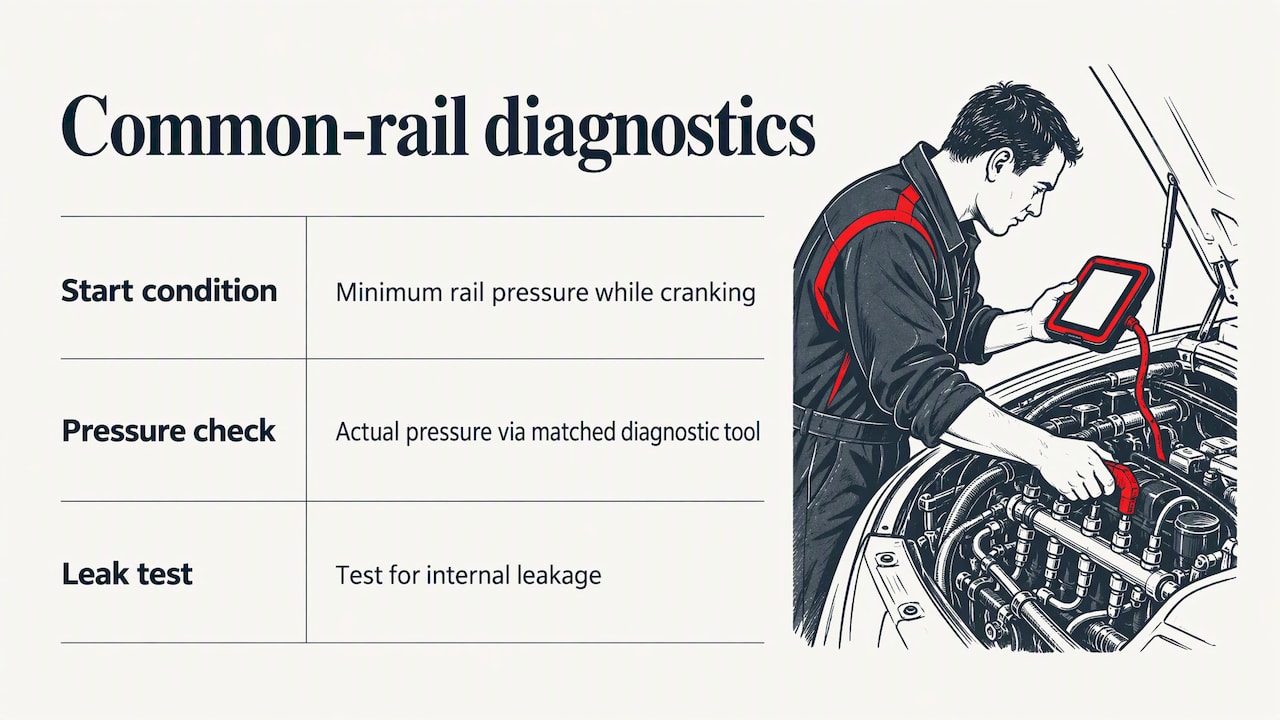
Common-rail and electronic engines

Signs the problem is more than a quick fix

Call a qualified technician if you see any of these:

  • heavy smoke while cranking but no firing

  • no smoke at all, suggesting fuel isn’t being delivered

  • oil level rising with a smell of diesel, which can point to fuel dilution

  • fault codes on an electronically controlled engine

  • repeated no-starts after you have bled the system

We don’t give a list of symptoms for failing injectors here, because a reliable diagnosis needs testing on the engine. Your engine’s workshop manual and a qualified technician are the right route.

Perspective

In our experience supplying parts for Yanmar and Sensei engines, many no-start problems end up as wear items: filters, belts, seals and cold-start components that were due for replacement. The costly mistake is ordering a part from a guess.

Before you order, write down the engine model, the serial number and the part reference from your parts book or the old component. Those three details are what allow us to help identify the correct genuine part for your machine.

We believe original manufacturer parts are the sensible choice for components that decide whether an engine starts and runs reliably. We never describe aftermarket or compatible parts as genuine OEM parts.

Iberspares

Genuine parts for starting problems

If your diagnosis points to a filter, pump, gasket, belt or cooling component, we supply genuine Yanmar and Sensei parts for marine, agricultural, construction, industrial, power generation, material handling and compact equipment applications across Portugal, Spain and the rest of Europe. Browse the range at Iberspares.

Send us the engine model, serial number and part reference at [email protected] and we will help identify what you need. You can also find or request parts at shop.iberspares.com.

Summary

Check the crank first, then fuel, then air and heat. Keep attempts short, never use starting fluid, and leave high-pressure and compression work to qualified technicians using the manufacturer’s instructions. When a part is needed, identify it by engine model, serial number and part reference, and request the genuine Yanmar or Sensei part through shop.iberspares.com or [email protected].

FAQ

Why does my diesel engine crank but not start?

The engine is turning but isn’t getting fuel, or the cylinders aren’t hot enough. Check fuel level, filters, air in the lines and glow plugs. Smoke while cranking suggests fuel is arriving, and no smoke can suggest a delivery failure.

Why is my diesel hard to start when cold?

Cold air and a cold engine lower the temperature reached at the end of compression, which diesel ignition relies on. Faulty glow plugs, a weak battery, thick oil or poor fuel can each make it worse. Check the glow plug circuit first.

Is it safe to put petrol in a diesel engine?

No. Official manufacturer guidance warns against adding petrol or alcohol to diesel fuel. If it has happened, don’t start the engine. Have the fuel drained and the system checked by a qualified technician.

How long should I crank a diesel that won’t start?

Keep attempts short. One manufacturer manual limits each attempt to 10 seconds and says to stop after three failures, while Ford advises up to 30 seconds with a 30-second rest. Follow the figure in your own engine’s manual.
Sources

Posted on

OEM vs Aftermarket Parts: How to Choose for Engines and Machinery

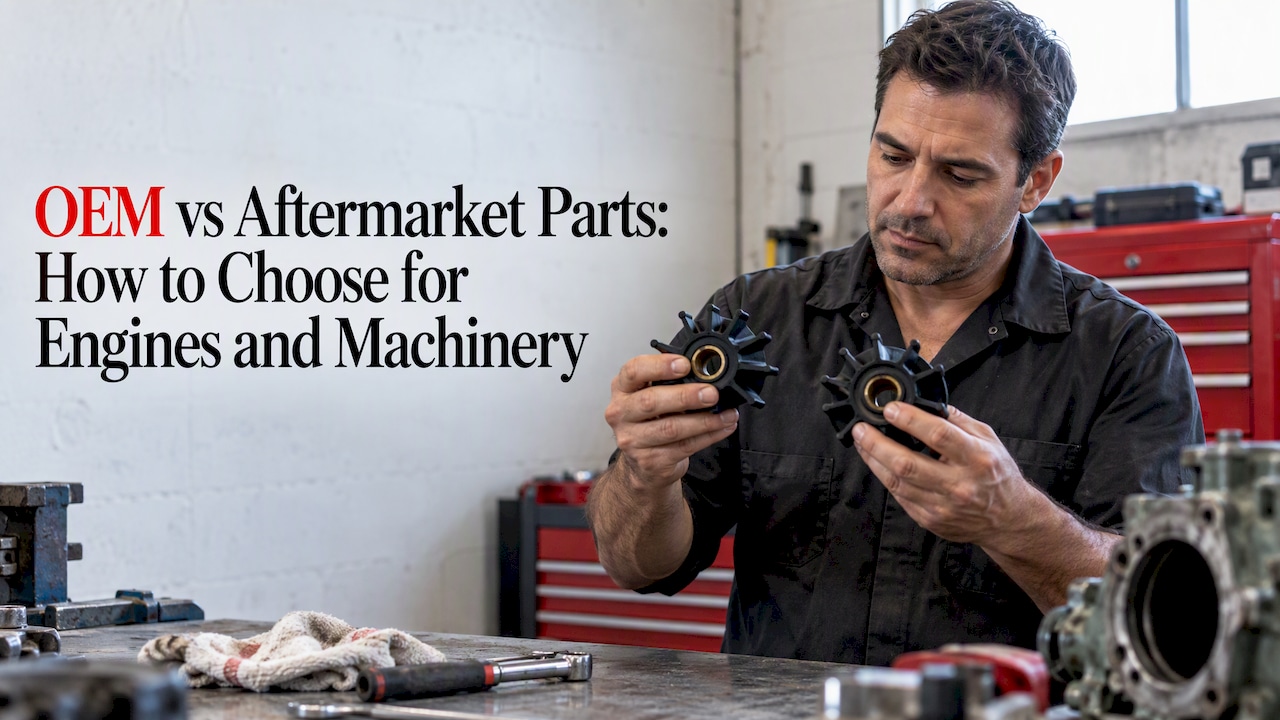
Mechanic comparing two engine water-pump impellers

OEM parts are made by, or to the specification of, the company that built your machine. Aftermarket parts are made by other companies to fit the same application. For a working engine, tractor, excavator, forklift or generator, the better choice is usually the part that gives you proven fit and traceability first, and a lower price second. A part that fails early costs far more in downtime than it saved at the counter.

This guide is written for people who keep machines earning: marine operators, farmers, contractors, workshops and fleet managers. Most advice online is about passenger cars. Here we cover what changes when an engine runs 2,000 hours a season and a stopped machine means a stopped job.

Iberspares

Choose Genuine Parts With Confidence

Iberspares supplies genuine Yanmar and Sensei parts, engines and components for marine, agricultural, construction and industrial machinery.

Explore genuine parts

TL;DR

  • OEM means the part matches the machine maker’s own specification. Aftermarket means a third party made it, and quality ranges from excellent to poor.

  • Neither label guarantees anything on its own. Judge the specific part and the supplier behind it.

  • Price is only one line of the cost. Count fitment errors, repeat labor, waiting time and lost work.

  • Using a non-OEM part does not automatically void a warranty in the US, but the maker can refuse a claim if that part caused the failure.

  • For engine internals, fuel, cooling and anything hard to reach, we recommend genuine parts. For simple wear items, a verified alternative can be reasonable.

Table of Contents

What OEM and aftermarket actually mean

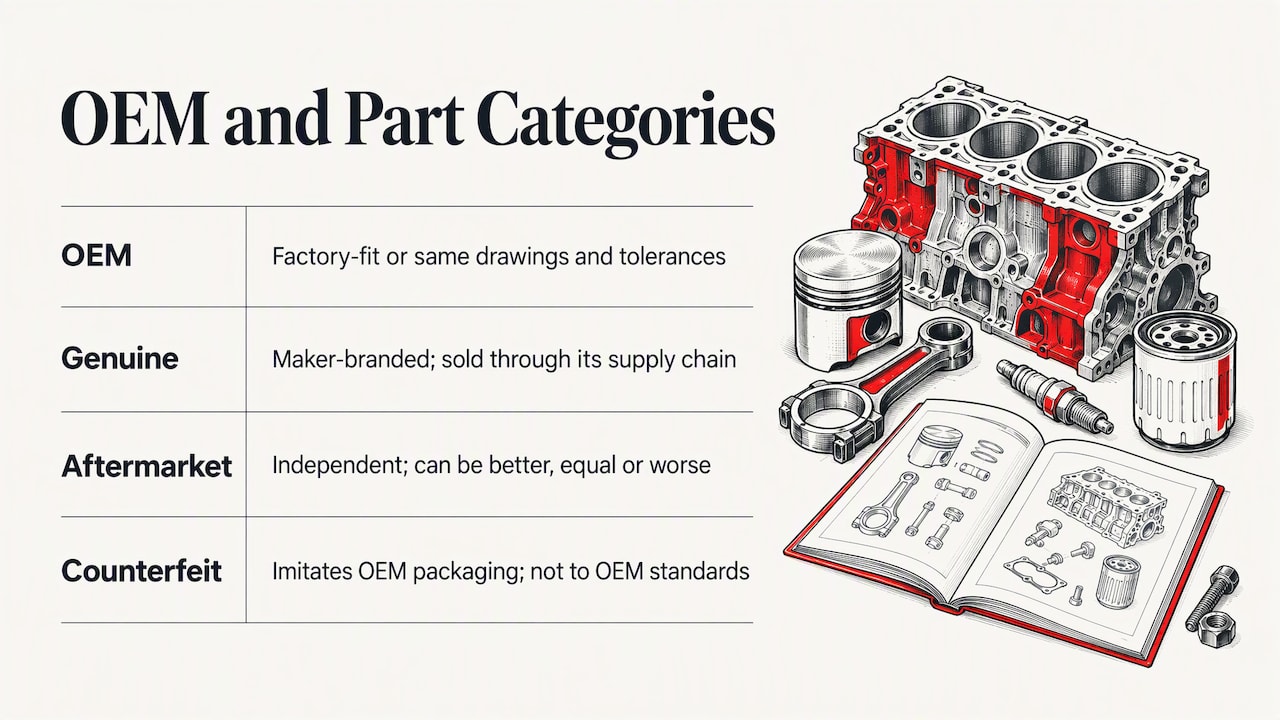
OEM stands for original equipment manufacturer. An OEM part is the one the machine left the factory with, or a part built to the same drawings and tolerances. It carries a part number that traces to the manufacturer’s catalog for your exact model and serial range.

Genuine parts are the maker’s own branded parts sold through the maker’s supply chain. In practice, “genuine” and “OEM” are used almost interchangeably, though a few OEM suppliers also sell identical parts in their own packaging.

Aftermarket parts come from independent manufacturers. Some reverse-engineer the original and match it closely. Some improve one property, such as a stronger material. Others cut cost by changing materials, tolerances or testing. Because the category is so broad, an aftermarket part can be better than the original, equal to it or clearly worse.

What OEM and aftermarket actually mean

A third group is worth knowing about: counterfeit parts. These imitate the OEM’s packaging and numbers but are not made to its standards. They are a separate problem from honest aftermarket parts, and we come back to them in the verification section.

OEM vs aftermarket at a glance

Factor

OEM / genuine

Aftermarket

Fit

Matched to your model and serial range

Varies; check the cross-reference carefully

Quality consistency

Same specification batch after batch

Wide range between brands and even product lines

Price

Usually higher up front

Often lower, but not always

Choice

One part per application

Many brands and grades

Warranty

Backed by the maker’s parts warranty

Set by each manufacturer or seller

Documentation

Catalog number, traceable supply chain

Depends on the brand

Best for

Engine internals, fuel systems, cooling, critical safety items

Simple wear items, where verified quality exists

The table is a starting point. The sections below explain where each row can flip.

Quality, fit and reliability

Why fit matters more on machinery

A diesel engine is a system of matched parts. A fuel injector, a seal or a water pump impeller is designed around the clearances, pressures and temperatures of that engine. A part that is a fraction of a millimeter off may seat, run and pass a quick check, then wear its neighbors over the next few hundred hours.

That is the hidden cost with lookalike parts. The failure often shows up on a different component, weeks later, when nobody connects it to the cheaper part fitted earlier.

Can aftermarket match or beat OEM?

Yes, sometimes. Independent makers can improve a known weak point, and some supply the same factories that make OEM parts. The Reddit discussion at the top of the search results makes this point: parts intended to beat the original tend to use stronger or lighter materials. That is plausible, but for a given part number you need evidence, not a promise.

The reverse is equally true. Heavy-vehicle inspection specialists point out that an OEM label does not guarantee the longest life and an aftermarket label does not mean poor quality, and that buyers should evaluate the part and the supplier, including configuration, delivery, warranty terms, quality evidence and service history. We agree with that framing. The difference is that with genuine parts, much of that evidence comes built in.

Where we draw the line

Our rule of thumb is to rank parts by consequence of failure:

  1. High consequence: pistons, rings, bearings, injectors, fuel pumps, turbochargers, head gaskets, cooling pumps, thermostats, and anything that can cause a seizure, a fire or a loss of propulsion at sea. Use genuine parts.

  2. Medium consequence: filters, belts, seals, hoses, sensors. Genuine is the safe default. A verified alternative is possible when you can prove it meets the original specification.

  3. Low consequence: bolts and brackets on non-structural parts, cosmetic items, guards. Aftermarket is usually fine.

Filters deserve a special mention. They are cheap, so people swap brands freely, yet filtration rating, bypass valve setting and media quality directly affect injector and pump life. A bargain filter is a false economy on a high-pressure fuel system.

Price, availability and downtime

The real price of a part

OEM parts usually cost more at purchase. Edmunds notes that OEM parts tend to be more expensive but are easier to choose, and that some aftermarket parts equal the original. Those are consumer car findings, yet the logic carries over to machinery.

What the sticker price leaves out:

  • Labor. Replacing a water pump or a head gasket takes hours whatever the part costs. Doing it twice because the first part failed doubles the biggest cost.

  • Consumables. Coolant, oil, gaskets and sealant are spent again on a redo.

  • Downtime. A tractor idle in harvest, a boat out of the water in season or a forklift stopped in a warehouse costs more per day than most parts cost in total.

  • Collateral damage. A failed part can take the component beside it.

A worked example

Imagine a part that costs $60 less in its aftermarket version. If it lasts the same time, you saved $60. If it fails at half the service interval, you pay for the part again, a second round of labor and a day of lost work. One failure erases the savings of many purchases. The reverse also applies: if a verified alternative lasts as long, the saving is real. The point is to know which case you are in.

Availability

Aftermarket gives you more brands, which helps when one is out of stock. OEM gives you one correct answer, which helps when you need to order fast without second-guessing. For older machines, genuine supply can be harder, so it is worth asking a supplier who works with the original catalog whether a part is current, superseded or replaced.

Warranty and your obligations

Warranty is where most myths sit. In the US, the Federal Trade Commission has stated that it is illegal for manufacturers or dealers to deny warranty coverage simply because someone other than the dealer did the work or supplied the part. That guidance is aimed at consumer vehicles. Industrial, marine and agricultural engines are often sold under their own warranty terms, so read the document that came with your machine.

The practical position is this:

  • A warranty claim can still be refused if the maker can show that a specific part, or the way it was fitted, caused the failure.

  • The maker’s own parts warranty covers the genuine parts you buy from the maker’s supply chain. An independent part is covered by whoever made or sold it.

  • Keep your service records, part numbers and invoices. They are your proof if a claim is disputed.

Yanmar, for example, argues that genuine parts and warranty registration protect the engine investment and the engine’s service life. That is a manufacturer’s view, naturally, but it points to a sound habit: register the warranty and document every service.

Outside the US, rules differ by country. If you operate in Europe or elsewhere, check local consumer and commercial law, plus your sales contract.

How to verify quality, whichever you buy

The goal is not to be loyal to a label but to be sure the part conforms to the specification. SAE International’s standard on counterfeit materiel, AS6174A, lists certification, traceability, testing and inspection as the ways of assuring that what you procure is authentic and conforms to requirements. The standard was written for aerospace supply, but the four ideas translate directly to a workshop.

  1. Certification. Ask whether the manufacturer holds a recognized quality management certification, and whether the part has a test report or declaration of conformity.

  2. Traceability. Can the seller tell you where the part came from? Lot numbers, original packaging and a clean supply chain matter. A seller that cannot answer is a warning sign.

  3. Testing. For critical parts, look for dimensional and material data. Ask for tolerances in writing.

  4. Inspection. Check the part against the old one before fitting: dimensions, thread, seal faces, markings, weight. Compare packaging and part numbers with the catalog.

Add these checks:

  • Match the part number to your model and serial number, not just the machine type. Mid-production changes are common.

  • Confirm whether the number has been superseded.

  • Get the warranty terms and return policy in writing.

  • Treat a price far below the market as a red flag, not a bargain.

Our perspective

We supply genuine Yanmar and Sensei parts, so you should know where we stand: we think genuine is the right default for equipment that earns money. We also think honest advice beats a pitch.

In our daily work with marine operators, farmers, contractors and workshops, the most common problem is not price. It is identification. People order a part that looks right and is not, because the machine had a running change, or the number was copied from an old invoice. Getting the right part the first time saves more than any discount.

That is why we put identification and compatibility first. Send us the machine model and serial number, and we help you match the correct part number from the original catalog before you buy. Original manufacturer parts come with a clear supply chain and a known specification, so you are not left guessing what is inside the box.

We also tell customers when a part is low consequence. Not every bolt needs a brand name. What matters is that you know what you are fitting and why.

— Iberspares Team

Genuine Yanmar and Sensei parts for working machines

If your machine runs on a Yanmar engine or uses Sensei components, we can help you find the exact part and ship it across Portugal, Spain and Europe. We cover marine, agriculture, construction and industry, power and generators, material handling and compact equipment, from filters, belts and gaskets to pumps and cooling systems.

Browse the full range at Iberspares genuine Yanmar and Sensei parts, or send an enquiry with your model and serial number and we will confirm compatibility before you order.

A short checklist for choosing

Use this before any purchase:

  1. What happens if this part fails? If the answer is a breakdown, injury or damage elsewhere, choose genuine.

  2. Is the machine under warranty or financed? Keep to the maker’s maintenance requirements and keep records.

  3. Can the seller prove origin? If not, walk away.

  4. Is the fitment confirmed by serial number? If not, confirm first.

  5. What is the cost of a day without the machine? Compare that, not the part price alone.

  6. Is the machine old and the part obsolete? Then a verified alternative may be the only practical route. Document it.

When the answers are mixed, buy the genuine part for the critical items and consider alternatives for the rest.

FAQ

Are aftermarket parts always cheaper than OEM?

No. Aftermarket parts are often cheaper, but not always, and a low price can hide shorter life or poor fit. Compare the cost over the service interval, including labor and downtime, rather than the purchase price alone.

Does using aftermarket parts void my warranty?

In the US, the FTC says a maker cannot refuse coverage simply because the part or service was not from the dealer. A claim can still be denied if that part caused the failure. Read your machine’s warranty terms and keep full records.

Is OEM the same as genuine?

Almost. Genuine parts are sold under the machine maker’s brand through its supply chain. OEM parts are made to the maker’s specification, sometimes by the same supplier and sold in other packaging. For purchasing, ask for the catalog part number and the supply source.

How can I tell whether a part is counterfeit?

Check packaging, markings and part numbers against the catalog, and buy from a seller who can show traceability. Certification, testing and inspection are the standard methods of assuring a part is authentic and conforming. A price far below the market is a warning sign.

Which parts should I never compromise on?

Anything whose failure stops the machine or damages other components: injectors, fuel pumps, bearings, pistons, head gaskets, cooling pumps and filters on high-pressure systems. For these we recommend genuine parts.

Sources

Posted on

Diesel Engine Oil Consumption: What’s Normal and What Isn’t

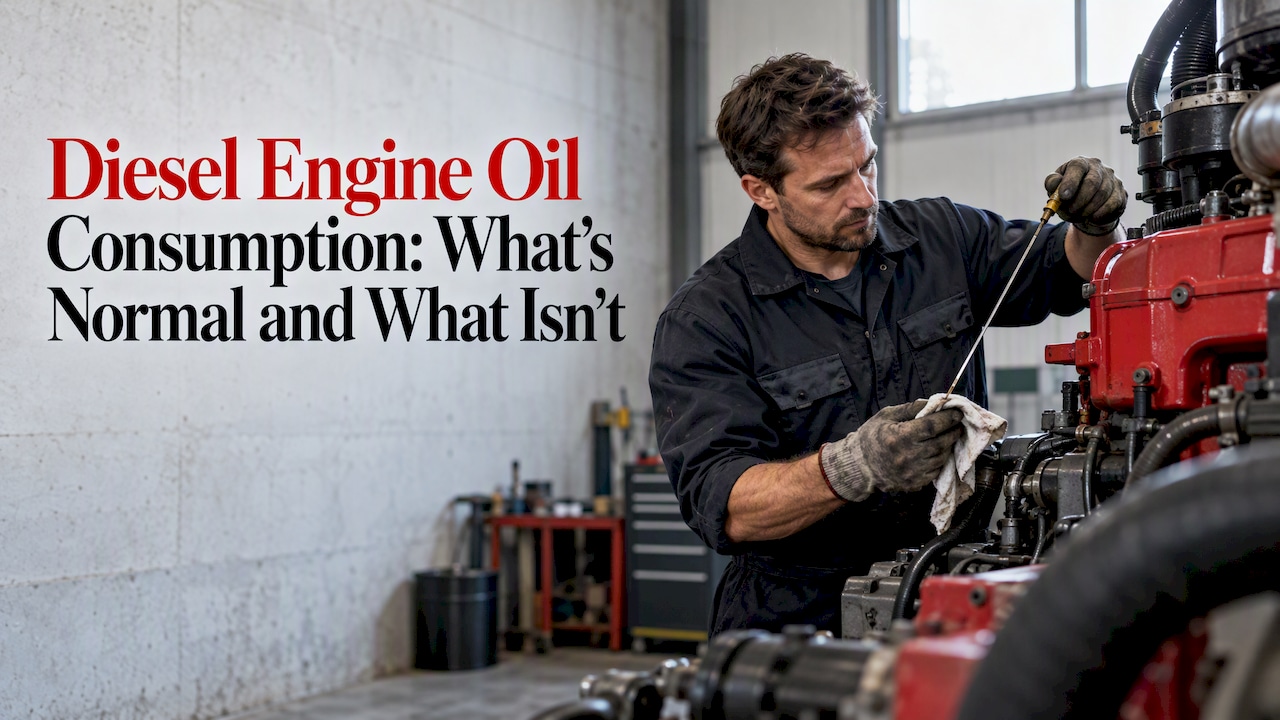
Mechanic checks oil level on diesel engine

Yes, a diesel engine is supposed to use some oil, and a slowly dropping dipstick is not by itself a fault. What matters is the rate, measured properly, against the limit your engine’s manufacturer publishes. There is no universal number: the benchmarks run from about 0.05 liters per hour on a generator set to 0.5 quart per 600 miles on a passenger diesel. This guide shows you how to read those figures, measure your own engine, and tell normal consumption from a problem.

Iberparts
Keep Diesel Engines Running Reliably
Iberparts supplies genuine Yanmar and Sensei engine components and maintenance parts for marine, agricultural, construction, and industrial applications.

Visit Iberparts

TL;DR

  • Some oil use is normal in every diesel. It is usually lowest after break-in and tends to rise over the engine’s life.

  • The only limit that counts is the one in your engine manual or the manufacturer’s service bulletin. Rules of thumb from forums are not limits.

  • Measure over a set distance or number of hours, with the engine level and warm, using the same method each time. Small reading errors distort the result.

  • Heavy loads, long idling, high rpm, stretched oil intervals and crankcase ventilation faults all push consumption up.

  • Oil that vanishes with no leak usually goes through the rings, turbocharger, valve stems or breather, so look there before replacing parts.

Table of Contents

Is it normal for a diesel engine to use oil?

It is. Oil is a working part of the combustion system, not a sealed fluid. A thin film stays on the cylinder wall after each piston stroke, and some of it burns. Some oil mist leaves through the crankcase ventilation, and some passes the turbocharger and valve stem seals. Manufacturers say so plainly: Kia’s diesel manual states that oil consumption while driving is normal and that you should check the level and top up regularly.

Two patterns are worth knowing:

  • Break-in. A Volkswagen technical bulletin notes that consumption varies by engine and over engine life, and that break-in periods commonly produce higher consumption before it settles.

  • Gradual change with age. As rings, liners and seals wear, consumption creeps up. A slow, steady rise is expected. A sudden jump is not.

The real question is never whether the engine uses oil. It is whether it uses more than its maker allows, and whether the rate has changed.

How much oil consumption is normal?

The honest answer is: it depends on the engine, the duty cycle and the manufacturer. The published benchmarks below show how wide the range is. They come from different engine types and are not interchangeable.

Engine or source Published benchmark What it applies to
Volkswagen bulletin Up to 0.5 US quart per 600 miles (0.5 liter per 1,000 km) Vehicle-specific manufacturer standard, not a universal diesel limit
GM bulletin, July 2023 1 US quart (0.946 liter) per 2,000 miles (3,200 km) 2024 and prior GM passenger cars and gasoline light-duty trucks under 8,500 lb GVW, under stated personal-use and maintenance conditions
Mercedes-Benz OM457/OM460 manual After running-in, up to 0.5% of the vehicle’s fuel consumption Heavy-duty truck engines; arduous conditions can exceed it
AGG AF2270/AF2540 manual 0.05 liter per hour, with oil capacity of 7.8 to 8 liters Those two diesel engine models
Baudouin PowerKit specifications Lube oil to fuel ratio below 0.1%, 0.2% or 0.3%, depending on the engine Listed generator engines

The GM figure is a gasoline-oriented benchmark, so do not use it as a diesel limit. It is included because it shows how a manufacturer frames the question: a stated quantity over a stated distance, under stated conditions.

Reading the units

Passenger vehicles are quoted per distance. Industrial, marine and generator engines are quoted per hour or as a percentage of fuel burned, because they often have no odometer that means anything.

Here are two worked illustrations of the arithmetic, using the published figures above:

  • Percentage of fuel. If a truck engine burned 35 liters of fuel per 100 km and sat at the Mercedes-Benz ceiling of 0.5%, it would use 0.175 liter of oil per 100 km, or 1.75 liters per 1,000 km. Real engines in good condition should sit well below their ceiling.

  • Per hour. At 0.05 liter per hour, an engine like the AGG units would use about 12.5 liters over 250 hours. That is more than one and a half full sump changes’ worth of oil, which surprises owners who assume the sump should stay full between changes.

The point is to convert your engine’s published figure into something you can compare with your own logbook.

Why a litre of oil does not last a fixed distance

A common question is how long one liter of oil should last. There is no fixed distance or time. Because the Mercedes-Benz limit is tied to fuel burned, the answer for that engine moves with load: a truck working hard burns more fuel and is allowed to burn more oil. Engine model and operating conditions change the answer again.

So skip the search for a magic mileage. Use your manufacturer’s limit and, if the level is falling faster than that, investigate.

How to measure oil consumption properly

Most disputes about oil use come from bad measurement. A dipstick read on a slope, or after a cold start, can look like a loss of half a quart that never happened.

The Volkswagen procedure shows how seriously a manufacturer treats this. It calls for precise documentation of oil mass, and warns that an error of only 50 grams can change the calculated consumption by 0.1 quart at 1,000 miles. It also requires a second measurement after at least 630 miles (1,014 km), with the results and diagnostic log reviewed before any repair.

You do not need a workshop scale to get a useful reading in the field. A disciplined routine gets you most of the way:

  1. Start from a known level. Change the oil and filter, or fill to the top mark on a level surface with the engine warm and settled for the same time you will wait later.

  2. Record the starting point. Write down the odometer or hour-meter reading, the date, and the oil brand and viscosity.

  3. Run the engine normally. Do not change your duty cycle for the test, but note heavy towing, long idling or unusual loads.

  4. Recheck under identical conditions. Same surface, same wait time after shutdown, same dipstick wiped and reinserted.

  5. Measure what you add. Top up with a measured container, not by eye.

  6. Repeat the cycle. One reading can mislead. Two or three give you a rate you can compare with the published limit.

Keep the log. If the engine is under warranty or you need to prove a trend to a dealer, a clean log is the most useful thing you can bring.

Why diesel oil disappears without a leak

When the level drops and the ground underneath stays dry, the oil is being burned or carried out with the exhaust or crankcase gases. DieselNet identifies four main pathways: the piston ring and liner system, the turbocharger, the valve stems, and crankcase ventilation. Engine transients and the oil’s formulation also affect how much is consumed.

In practice, here is what each pathway looks like:

  • Rings and liner. Worn rings, a glazed liner or carbon-packed ring grooves let more oil into the combustion chamber. Typical sign: consumption rises with mileage or hours, often with some blue-gray smoke under load.

  • Turbocharger. Worn seals let oil pass into the intake or the exhaust. Typical sign: oil in the intercooler piping, smoke on throttle changes, or a whining turbo.

  • Valve stems and guides. Worn seals let oil run down the stem. Typical sign: puff of smoke at start-up or after a long idle.

  • Crankcase ventilation. A blocked or failing breather system pushes oil mist into the intake. Typical sign: oily residue in the air path and consumption that jumps without other wear signs.

Because four systems can produce the same symptom, replacing one part on a guess is expensive. Check the cheapest and most common causes first: the breather, the oil level reading, the oil grade and the service history.

Operating conditions that raise oil consumption

The same engine can use very different amounts of oil depending on how it works. The research behind this guide points to a consistent list.

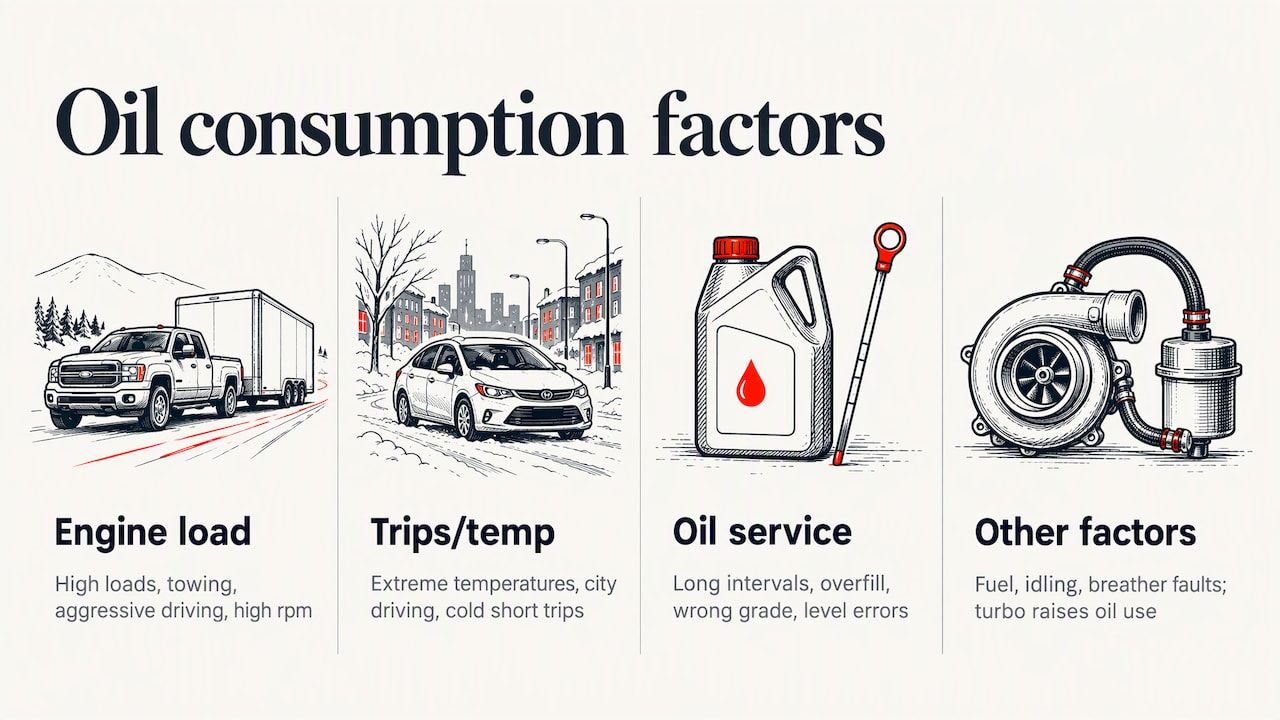
A BMW service bulletin lists city driving, high engine loads, poor fuel quality, extreme ambient temperatures, excessively long oil-service intervals, overfilling, incorrect viscosity, high engine speed, long idling in traffic and crankcase ventilation faults as factors that can increase oil consumption or degradation. It also notes that turbocharged engines normally consume more oil than naturally aspirated ones.

Operating factors that can raise oil consumption

A 2023 GM bulletin adds aggressive driving, towing or heavy loads, high rpm, short cold trips that cause fuel and water dilution, and incorrect level measurement. The last one is the easiest to fix.

Idling deserves its own mention

Idling is hard on diesel oil. Natural Resources Canada’s fleet guidance reports that controlled studies found prolonged idling cut engine oil life by 75%, from 600 engine-hours to 150, because incomplete combustion leaves unburned fuel that condenses and contaminates the oil. Thinner, fuel-diluted oil is more likely to be consumed and protects less.

That matters for equipment that idles by design: excavators waiting on trucks, forklifts between picks, standby generators, boats at the dock with the engine running.

What this means by sector

  • Construction and industrial. Long idling and heavy load cycles. Watch the hour meter, not the calendar.

  • Agriculture. Seasonal bursts of heavy work followed by long storage. Check oil level before the season, not after the first long day.

  • Marine. Extended low-load running and dock idling. Check for fuel dilution and keep records by engine hours.

  • Material handling and power generation. Standby sets and trucks that run light for long periods. Light loads can leave deposits and dilute oil.

Service intervals and fuel quality

Oil that is past its useful life behaves differently, and consumption and condition are linked. Manufacturers tie intervals to oil category and fuel quality, and the numbers can differ a lot.

  • For Series 1600 engines, Rolls-Royce Solutions specifies oil changes at 1,000 operating hours or one year for Category 3/3.1 oils with approved fuel, and 500 hours or one year for Category 2/2.1 oils with approved fuel. Unapproved fuels are expected to need shorter intervals.

  • For KDI mechanical-injection engines, Lombardini specifies 500-hour oil changes with fuel below 15 mg/kg sulphur and 250 hours above 500 mg/kg. For Tier 3/Stage IIIA engines, it says to change oil at a TBN of 6.0 mgKOH/g, which high-sulphur fuel may reach after 125 hours.

Two lessons follow. First, the interval printed in a generic table is not your interval if you run poor fuel or a hard duty cycle. Second, an engine that eats oil on a stretched interval may be telling you the oil is spent, not that the engine is failing.

When to worry and what to do

Stop treating the dipstick as the whole story. Move to diagnosis when any of these is true:

  • Consumption exceeds the manufacturer’s stated limit across two or more careful measurements.

  • The rate has risen sharply compared with your own earlier records.

  • Oil use comes with blue-gray smoke, loss of power, oil in the intake path, or a whining turbo.

  • The level has been rising instead of falling, which can point to fuel or coolant entering the oil. Have a mechanic check this promptly.

A sensible order of checks, cheapest first:

  1. Confirm the level reading method and the measured top-ups.

  2. Verify oil grade and viscosity against the manual, and confirm the sump is not overfilled.

  3. Review the interval against hours, duty cycle and fuel quality.

  4. Inspect the crankcase ventilation system, filters and hoses.

  5. Inspect the turbocharger and its oil lines for play and seepage.

  6. Only then consider compression or leak-down testing and valve stem or ring work.

One more reason to act: DieselNet explains that consumed oil adds to hydrocarbon and particulate emissions, and that oil-derived ash is a major contributor to ash buildup in diesel particulate filters. Oil consumption costs more than the price of the oil. It affects deposits and aftertreatment durability.

Our perspective

Our perspective

Most oil consumption calls we hear about end the same way: the engine was fine, and the measurement, the oil or the interval was the problem. The second most common ending is a worn part that could have been caught earlier if someone had kept a log.

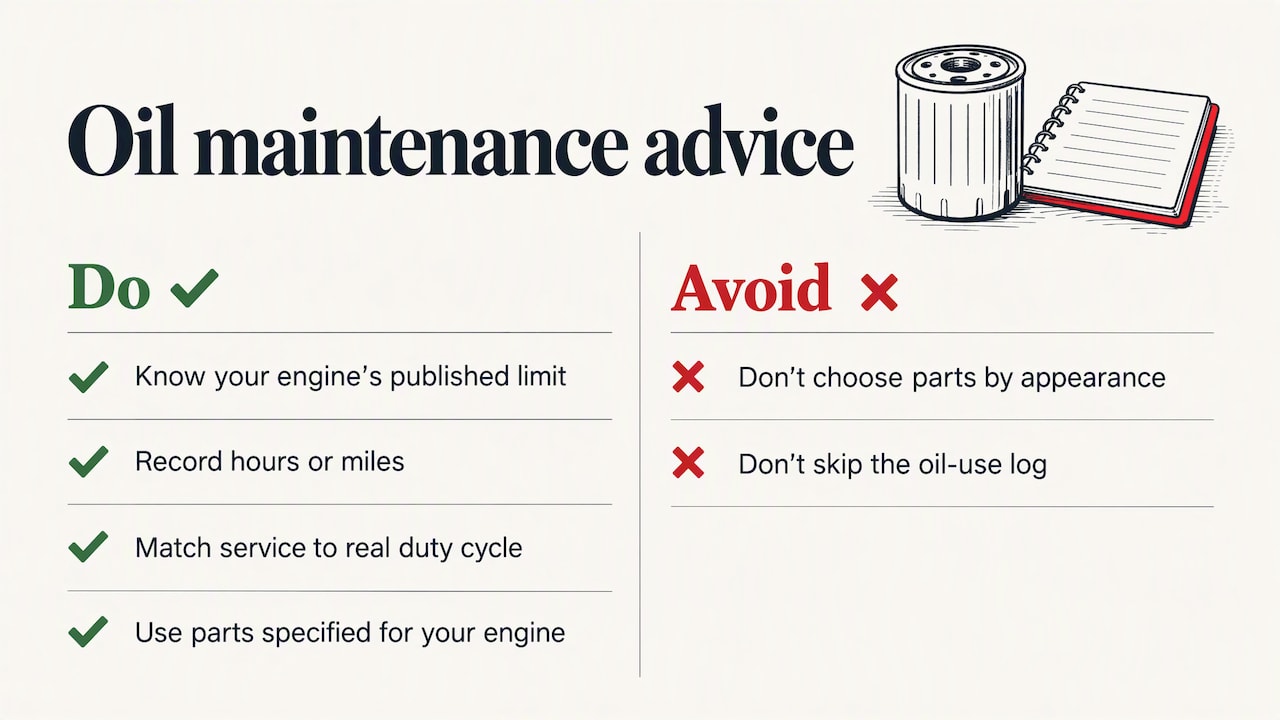
Our advice is practical. Know your engine’s published limit, keep a simple record in hours or miles, and change filters and oil on the schedule that matches your real duty cycle. When something does need replacing, such as a breather component, seals, gaskets, filters or a pump, fit the part specified for that exact engine model. Parts that look similar can differ in ways that show up as the very symptom you are chasing. Identification by engine model and serial number removes that guesswork, and it is the part of the job we care most about getting right.

— Iberparts Team

Genuine parts for the fix

If your checks point to a worn or failed component, Iberparts supplies genuine Yanmar and Sensei spare parts, engines and components for marine, agricultural, construction, industrial, power generation, material handling and compact equipment applications. That includes filters, pumps, belts, gaskets and cooling system parts. Our team helps with parts identification and compatibility, so you order the right item the first time. Browse the range and send us your engine details at Iberparts.

Iberparts

FAQ

Is it normal for diesel engines to use oil?

Yes. Manufacturers such as Kia state that oil consumption during use is normal and that you should check the level regularly. What you should watch is the rate against your engine’s published limit, and any sudden change.

How long should one liter of oil last in a diesel engine?

There is no fixed distance or time. For one manufacturer example, Mercedes-Benz allows consumption of up to 0.5% of fuel consumption after running-in, so the answer depends on fuel burned, engine model and conditions. Use your own manual’s limit.

Why am I losing oil but have no leaks?

The oil is most likely being burned or vented. DieselNet names the piston ring and liner system, turbocharger, valve stems and crankcase ventilation as the main pathways. Check the breather and your level-reading method first, since they are cheapest to rule out.

Does idling increase diesel oil problems?

It does. Natural Resources Canada reports that prolonged idling cut oil life by 75% in controlled studies, because unburned fuel condenses and contaminates the oil. Shorter idle times and shorter intervals for idle-heavy equipment help.

When should I take the engine in for service?

When two careful measurements exceed the manufacturer’s limit, when the rate climbs against your own records, or when oil use comes with smoke, power loss or a rising oil level. Have a qualified diesel mechanic diagnose it before replacing parts.

Sources