Good Yanmar parts sourcing comes down to three things: identifying the exact engine, verifying the part number against the manufacturer’s data, and buying from a supplier that keeps the part in stock and knows your application. Get those right and a repair takes a day. Get one wrong and a machine sits idle while a wrong part travels back. At Iberspares we supply parts for Yanmar and Sensei engines and equipment across construction, agriculture, marine, power generation, material handling and compact equipment, so this guide follows the routine we would want every buyer to use.
TL;DR
- Start with the complete engine model and the serial number. Both are needed to pin down the right part, and the model alone is not enough.
- Write the part name and part number on every order, and check them against the parts catalog or manual for that exact engine.
- Genuine-spec parts matter for emissions compliance and warranty. Check what your engine’s after-treatment and warranty terms require before you choose a grade.
- Plan the stock: keep routine service items on the shelf and know your supplier’s lead time for the rest.
- Choose a supplier by application knowledge, inventory depth and how quickly it can confirm a match, not by catalog size alone.
Table of Contents
- Why sourcing Yanmar parts takes more care than it looks
- Step 1: Identify the engine before you search
- Step 2: Verify the part number against the catalog
- Step 3: Choose the part grade with emissions and warranty in mind
- Step 4: Pick the supplier on criteria that reduce downtime
- Sourcing for marine operators and shipyards
- Sourcing for generators and standby power
- Sourcing for construction, agriculture and material handling
- Planning stock to avoid emergencies
- Perspective
- Order Yanmar and Sensei parts from Iberspares
- FAQ
- Sources
Why sourcing Yanmar parts takes more care than it looks
Yanmar engines turn up in a very wide range of machines: compact excavators, tractors, forklifts, workboats, auxiliary generators, standby power sets. The same engine family can be fitted with different injection pumps, cooling arrangements, mounting brackets and emissions hardware depending on the machine and the year it was built. A part that fits one version of an engine can be wrong for the next.
There is also a boundary to know about. Yanmar’s US support FAQ states that engines powering products from several other equipment makers, including John Deere, Komatsu, Thermo King, Ingersoll-Rand, NACCO (Hyster/Yale), Volvo and Isuzu, are not supported by the Yanmar service network and must be supported through that equipment maker’s own network. So the first question for a multi-brand workshop is simple: is this a Yanmar-supported engine, and which machine is it actually installed in?
For a buyer, the cost of a mistake is rarely the price of the part. It is the freight, the second teardown, the rental unit on site and the crew waiting. That is why the routine below is built around avoiding errors, not only finding the lowest price.
Step 1: Identify the engine before you search
The single most useful piece of data is on the engine itself. Yanmar’s US FAQ says that identifying a part requires the complete model number and the serial number. Yanmar Europe’s marine parts page makes the same point: giving a Yanmar partner the engine’s model and serial number is enough for them to identify the exact part.
A practical capture routine for every machine in your fleet or customer base:
- Photograph the engine identification plate once, clean and in focus, and file it with the asset record. Plates get painted over, oiled and worn, and the best moment to read one is not during a breakdown.
- Record the complete model designation exactly as printed, including every suffix. Suffixes often separate variants with different parts.
- Record the serial number in full.
- Record the machine details too: make, model, year, hours and application (for example generator set, skid steer, workboat). Application matters because the same engine family is configured differently for each.
- Note what you already know about the failed part: its location, its condition and any numbers cast or stamped on it.
At this stage you can work alone, and you should. Where our experience helps is the next one: when the plate is unreadable or the machine’s paperwork is missing, application knowledge narrows the candidates quickly, which is the reason we organize our catalog around application sectors and not only by part number.
Step 2: Verify the part number against the catalog
Identification gives you the engine. Verification gives you the part. Yanmar’s own parts catalogs are explicit about it: the catalog for the 3TNV76 engine tells buyers to write the engine model and serial number, plus the name and number of each part, on the order sheet to ensure reliable delivery. Treat that as a minimum standard for every order you place, whatever the supplier.
A clean order line contains:
| Field | Why it matters |
|---|---|
| Engine model (complete) | Separates variants within one engine family |
| Serial number | Catches mid-production changes |
| Part name | Human check against the exploded drawing |
| Part number | The actual match key |
| Quantity | Kits and sets are often counted differently from single items |
| Application | Gives context if a supersession or alternative is involved |
Three habits prevent most mix-ups:
- Check the exploded drawing, not only the number. A number typed from a photo can be off by one digit. If the drawing shows a different shape from the part in your hand, stop.
- Look for supersessions. Older part numbers are often replaced by newer ones. A supplier that knows the engine can tell you whether the number you hold is current.
- Compare physically on arrival. Match the new part to the old one before the machine is opened further: mounting points, port positions, thread, length.
Yanmar also offers tools on the manufacturer side: its industrial engine support pages describe a worldwide dealer search with the latest engine manuals, a 3D engine model tool and a diagnostic trouble code search app for on-site service. Manuals and fault codes help you decide what to replace. Matching and supplying the part is the step where a supplier with strong application knowledge saves you hours, and it is the step we handle at Iberspares when you send us the engine model, serial number and part details.
Step 3: Choose the part grade with emissions and warranty in mind
Sourcing is not only a question of finding a number. It is also a question of what quality of part goes into the engine. Yanmar’s global parts page says that non-genuine parts can show inconsistent surface hardness and casting cavities, and that not using genuine parts may prevent an engine from meeting emission regulations and leave the product outside warranty cover.
The same page explains why this matters most on modern engines. Genuine components are designed to match systems such as common-rail fuel injection, EGR (exhaust gas recirculation) and DPF (diesel particulate filter) after-treatment, and, since 2020, stricter SOx rules for ships worldwide have led Yanmar to redevelop fuel system components for compliant fuel. If you service newer machines, the injection system, filters and after-treatment items are where a mismatch is most costly.
A useful way to decide grade by component:
- Fuel, injection and emissions components: use genuine-spec parts, particularly on engines under warranty or subject to emissions rules.
- Wear and consumable items (filters, belts, impellers, gaskets, seals): the right part number and good quality matter more than anything else. Keep these in stock.
- Structural and undercarriage items on construction and agricultural machines: hardness and casting quality drive service life. Yanmar notes consistent surface hardness as a feature of genuine undercarriage parts.
We supply parts for Yanmar and Sensei engines and equipment, and the point of our application-focused approach is that you receive the part specified for your machine, not a near match.
Step 4: Pick the supplier on criteria that reduce downtime
Buyers often run through a list of suppliers for each job. A more efficient method is to settle on one or two suppliers using the criteria that actually affect your uptime.
Application knowledge. Can the supplier talk about your engine in the context of your machine, whether it is a compact excavator, a marine auxiliary or a standby generator? Questions about variants and supersessions should get quick, specific answers.
In-stock inventory. A supplier that holds stock can dispatch on the day you order. One that sources each part on request adds days. Our positioning is built on extensive in-stock inventory for rapid dispatch.
Identification accuracy. The fastest order is the one you never have to return. We aim to identify the correct part efficiently to minimize errors and delays.
Range across your fleet. Mixed fleets are the norm. A supplier that covers Yanmar and Sensei across construction, agriculture, marine, power, material handling and compact equipment lets you consolidate orders and paperwork.
Documentation. Clear part descriptions and numbers that you can check against the manufacturer’s catalog.
Emergency capability. Ask how a rush order works before you need one, and keep the contact details with your asset records.
One structural point: Yanmar says it does not sell service parts directly to consumers and offers a warranty on service parts through dealers, as stated in its US parts FAQ. For professional buyers who need dependable supply and fast dispatch, a specialist distributor that holds stock and knows the applications is the practical route, and that is the role Iberspares plays.
Sourcing for marine operators and shipyards
Marine engines add two complications: corrosion and access. Raw-water pump impellers, heat exchangers, zincs and belts are routine consumables, but the part that fits one installation may differ from the next because of the cooling arrangement and the gearbox it is paired with. Capture the engine and gearbox plates together.
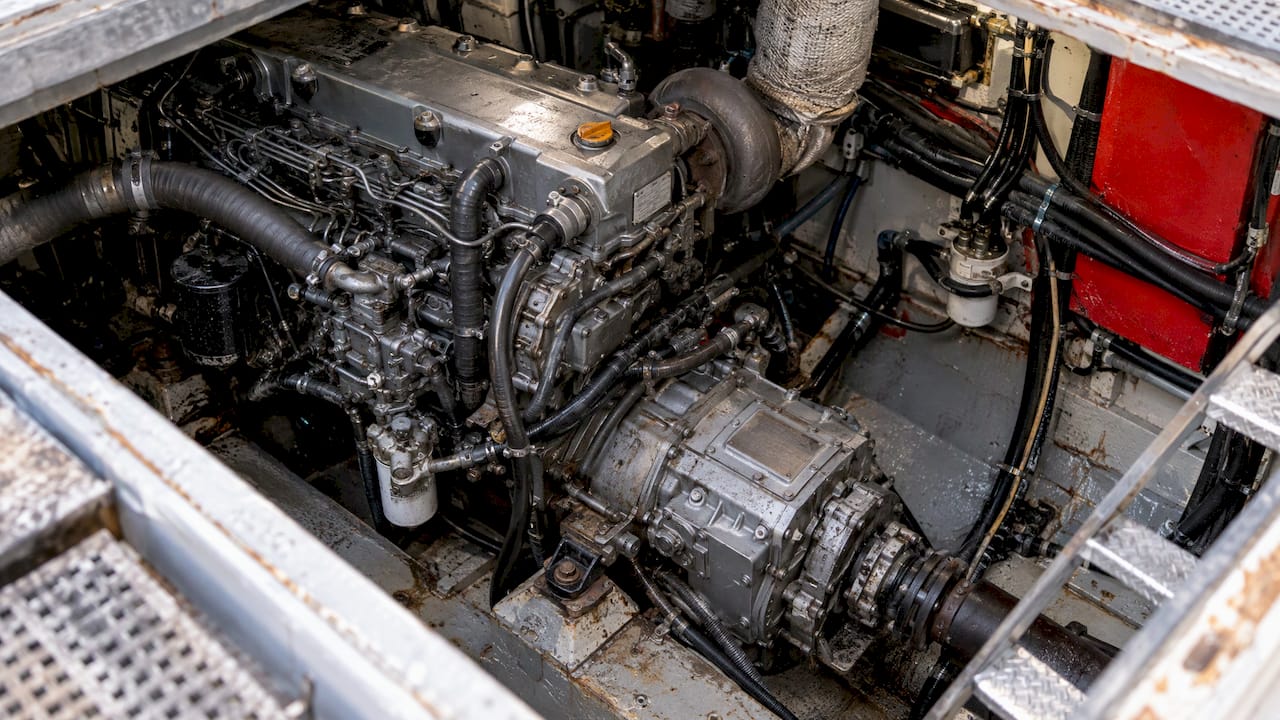
Marinas, shipyards and commercial fishing fleets should also think in seasons. Spring commissioning and end-of-season layup both create peaks, and a stocked service kit per engine avoids the situation where a boat misses the first weeks of the season for a thirty-dollar part. For readers looking for marine parts and service information in other markets, the marine industry solutions page of a Mexican machinery group shows how local parts and technical support are organized in that region.
Sourcing for generators and standby power
Standby and prime power sets reward planning more than any other application, because a generator that is needed is usually needed immediately. Fault codes, abnormal sounds and a failed start under load are the symptoms, and by then the supply chain is the constraint.
A sensible approach for generator maintenance companies and emergency power providers:
- Use the engine manufacturer’s service manual for the interval list. Intervals depend on hours run and on calendar time, and standby sets that run little still age.
- Build a standard service kit per engine model: oil filter, fuel filters, air filter, belts and the seals or gaskets the manual calls for at that interval.
- Keep a short list of failure-prone items for sets in critical sites: belts, hoses, coolant and fuel components.
- Reorder when you open a kit, not when you find it empty.
- Log each replacement against the unit’s serial number, so the next sourcing request starts with complete data.
This turns generator maintenance parts sourcing into a routine order and not an emergency.
Sourcing for construction, agriculture and material handling
In construction and agriculture the pressure comes from the season or the project. A compact excavator that stops mid-job or a tractor that fails in harvest costs far more in lost work than in repair parts. Rental companies and dealers have the same exposure across many units.
What helps here:
- A parts list per machine model, with filters and belts pre-identified by number.
- Stock levels tied to fleet size: the more units of one engine family you run, the more a shelf of common service items pays back.
- A single supplier that can cover the engine and the equipment side, since a machine usually needs both.
- Forklift workshops and in-house logistics maintenance teams can apply the same logic to their truck fleets, with serial-number records per truck.
Iberspares covers construction and industry, agriculture, material handling and compact equipment, so a mixed fleet can be ordered through one catalog.
Planning stock to avoid emergencies
Manufacturers plan inventory in much the same way you should. Yanmar describes its GSSC system as matching worldwide repair-parts inventory with demand information and forecasts to shorten delivery times and respond to peak seasons and emergencies. Its network page reports stock of tens of thousands of items per region, for example 43,200 items in the Americas as of 2020. The lesson for a workshop is to do the same at your scale: forecast from fleet data, stock the predictable, and know the lead time for the rest.
A simple three-tier model:
| Tier | Examples | Policy |
|---|---|---|
| A: routine | Filters, belts, impellers, seals | Hold stock, reorder at a minimum level |
| B: likely | Injectors, pumps, sensors, hoses | Hold for critical or high-hour machines |
| C: major | Heads, blocks, turbochargers, transmissions | Order on diagnosis, know supplier lead time |
Review the tiers once a year against what you actually used. Parts you replaced twice move up a tier. Parts that sat for three years move down.
Perspective
Most delays we see in parts sourcing do not come from a part being unavailable. They come from an order that started with incomplete information: a model number with no serial, a part number copied from an old invoice, a machine described by its brand and not by its engine.
That is why we built Iberspares around application knowledge. Our approach is to know how Yanmar and Sensei engines are used in construction, agriculture, marine and power generation, so that we can identify the correct part efficiently, with fewer errors and less waiting. We keep extensive stock for rapid dispatch because a correct part that arrives late still leaves the machine idle.
Our advice to every workshop is the same: record the engine plate, order by number and name, and keep your routine items on the shelf. When something has to be fixed today, send us the model and serial and we will work from there.
Duarte
Order Yanmar and Sensei parts from Iberspares
If you run a workshop, a fleet or a marina and need Yanmar or Sensei parts for construction and industry, agriculture, marine, power and generators, material handling or compact equipment, our catalog is organized by those sectors. Have the engine model, serial number and part details ready, and you can order routine and urgent parts online at Iberspares.
For a wider view of the ranges, the Yanmar and Sensei parts categories are all on the main site.
FAQ
What information do I need to find the right Yanmar part?
You need the complete engine model and the serial number, as Yanmar’s own support FAQ states. Add the part name and part number if you have them, and the machine and application the engine sits in. With these, the match can be confirmed before you order.
Where do I find replacement Yanmar parts for an older engine?
Start with the identification plate to get the model and serial number, then check the part number against the engine’s parts catalog. Older numbers are sometimes superseded, so ask your supplier to confirm the current number. We can help identify the part from the engine details.
Are genuine-spec parts necessary for every repair?
For injection, fuel and emissions components, they are the safest choice, since Yanmar states that not using genuine parts may prevent meeting emission regulations and affect warranty cover. For routine consumables, the priority is the exact correct part number and consistent quality.
Which generator parts should I keep in stock?
Keep a service kit per engine model: oil, fuel and air filters, belts and the seals the manual calls for. Add hoses and fuel components for critical sites. Take the intervals from the manufacturer’s service manual for your set, and reorder when you open a kit.
How do I reduce downtime when a machine fails?
Have the engine model and serial number on record before the failure, stock the routine items, and use a supplier that holds inventory for fast dispatch. Planning for peak seasons, as manufacturers do with their own inventory, prevents most urgent orders.
Sources
- Genuine Parts FAQs, Support, YANMAR USA
- YANMAR engine service support, Industrial Engines
- Yanmar 3TNV76-DU1 parts catalog
- Yanmar global genuine parts: product quality, safety and environment
- Yanmar parts supply network, After Sales Service
- Genuine parts, Yanmar Europe Commercial Marine
- Marina industry page, Anderson Group Mexico
Content strategy and optimisation for Google and AI-powered search platforms by Velveteen SaaS — specialists in online visibility and customer acquisition.