
Posted on

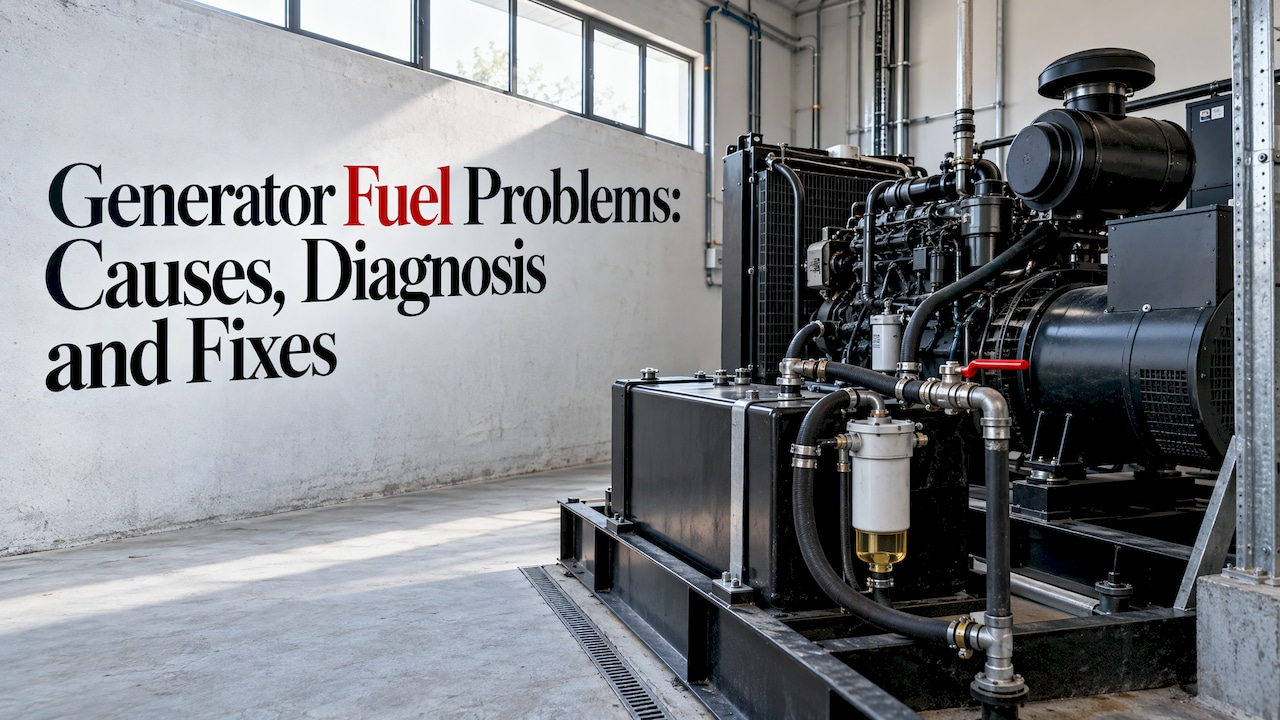
Generator Fuel Problems: Causes, Diagnosis and Fixes

Diesel generator fuel system in service room

Most generator fuel problems come down to four things: old or contaminated fuel, air in the system, a restricted filter or line, and a worn pump or injector. Work through them in that order, cheapest check first, and you will usually find the fault before you replace anything expensive. When a part does need replacing, the fastest route back to a running set is matching the exact part number to your engine. That is where our Yanmar and Sensei parts work starts.

This guide is written for workshops, maintenance crews, rental fleets and operators who run diesel generator sets and engines on construction sites, farms, boats and standby power. It covers symptoms, a tank-to-injector diagnostic routine, storage and prevention, and the parts that typically need replacing.

Iberspares
Find the Right Generator Parts
Iberspares supplies Yanmar and Sensei engine and equipment parts to help workshops and operators source components for generator repairs.

TL;DR

  • Cranking but not firing, hunting RPM, black or white smoke and power loss under load all point first to the fuel system: contamination, air, or a blocked filter.
  • Diesel systems must be airtight. A tiny leak at a hose or filter gasket can stop the pump building injection pressure.
  • Diesel typically keeps 6 to 12 months in normal storage, so standby sets that only run short tests are the most exposed.
  • Check in order: fuel quality and quantity, shutoff valve and solenoid, filters and water separator, lines and priming, then pump and injectors.
  • Replace worn consumables with the right part first time. Identification errors cost more downtime than the part itself.

Table of Contents

Recognizing a fuel supply problem

A fuel problem rarely announces itself with a clear message. It looks like several different faults, so learn the patterns.

Symptom What it usually points to
Cranks but will not fire Air in the system, empty tank, closed fuel solenoid, lost prime
Starts, then stops Restricted filter or supply, lift pump fault, solenoid circuit fault, leak
Hunting or surging RPM Air entering the line, partly blocked filter, water in fuel
Black smoke Unburnt fuel, worn injectors, restricted air or excess fuel
White smoke Water in fuel or air leaks
Loss of power under load Clogged filter or separator, weak pump
Hard starting and high fuel use Worn injection pump or nozzles, incorrect timing

The signs in the first rows are described in a diesel generator fuel-system troubleshooting guide, which also names the three usual root causes: contaminated fuel (including microbial sludge from water in the tank), air from small hose or gasket leaks, and blocked filters and separators. The same guide notes that filters that clog more often than about every 250 hours are a sign that the fuel itself is the problem, not the filter.

A manufacturer’s troubleshooting guide for a diesel genset lists the causes when an engine starts and then stops: no fuel in the tank, a restricted filter or supply, an open circuit to or defective fuel solenoid, a lift pump malfunction, a fuel system leak, defective injector nozzles and a defective injection pump. That list is a useful map of where to look, and it is the order of the routine below.

Why air is the hidden cause

Petrol engines tolerate small leaks. Diesel injection does not. Air is compressible, so even a microscopic leak at a hose, a loose filter gasket or a poorly seated bleed screw stops the pump from building injection pressure. The result is the classic complaint: the engine cranks all day and never catches.

That is why “cranking but no fire” is more often air, a lost prime or a closed solenoid than a failed engine. If you changed a filter, ran the tank dry or opened any fitting recently, assume air first. Re-seat the filter, replace the gasket or O-ring, and prime again.

A practical note for workshops: replace filter seals and gaskets as part of every filter change. A reused seal is a common source of repeat call-outs.

A tank-to-injector diagnostic routine

Start at the tank and move toward the engine. Each step is quick, and each rules out a whole group of faults.

1. Check fuel quantity and quality

Confirm there is fuel, and that it is the right fuel. Draw a sample from the bottom of the tank or the sump and look for water, sludge or dark, stringy matter. Bottom sampling is the standard first test because water and sediment settle there.
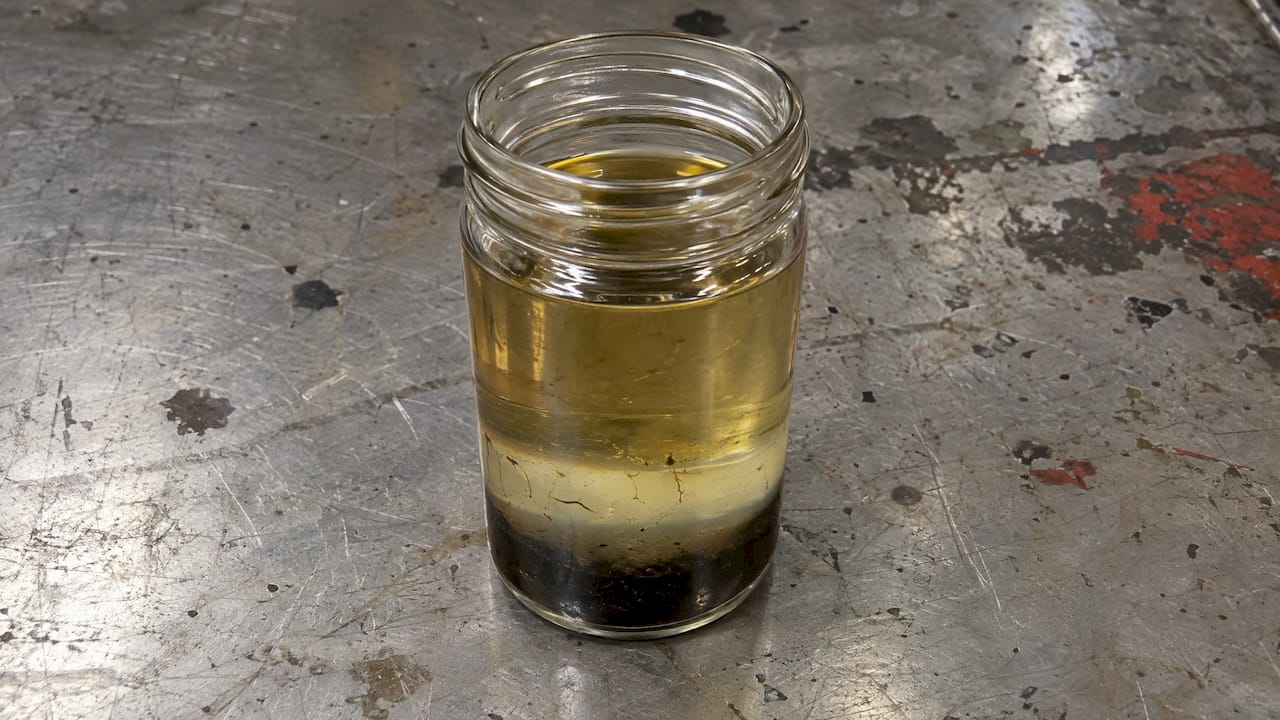
Diesel sample showing water and settled sediment

On a marine or standby set, also check the tank vent and fill cap for blockage or damage. Water enters through failing seals and condensation.

Where fuel is old, the fix is to drain, clean and refill rather than to chase parts. Replacing injectors because of stale fuel is an expensive way to learn the lesson.

2. Check the shutoff valve and solenoid

Confirm the tank valve and any in-line shutoff are open. Then, with the key or controller at start, listen for the fuel solenoid to click. No click means checking fuses, connectors and wiring before anything else. A solenoid that does not open will starve the engine as completely as an empty tank, and the symptom is identical.

For a set with an electronic controller, the same troubleshooting logic applies: a damaged fuel relay is a documented cause of a cranking-but-not-starting condition in one generator operation and maintenance manual, alongside running out of fuel and losing prime.

3. Inspect filters and the water separator

This is where most fuel-flow faults end. A restricted primary filter, secondary filter or water separator lets the engine run at idle and then starve as soon as load rises. A diesel engine service manual lists a clogged fuel filter or water separator first among the causes of no fuel at the injectors, with replacement and bleeding as the remedy.

When you remove an old filter, look at it. Black or slimy residue, a sour smell, or milky liquid in the separator bowl suggests water and microbial growth in the tank, and that means cleaning the tank, not just fitting a new filter. If filters clog repeatedly, the cause is upstream.

For a work routine:

  1. Shut down and let the engine cool.
  2. Close the supply valve if fitted and place a drip tray.
  3. Replace the primary and secondary filters together with new seals.
  4. Drain the water separator.
  5. Prime and bleed before starting (see below).

4. Trace the lines and prime the system

Walk the supply and return lines looking for damp spots, cracked or collapsed hose, loose clamps and chafing. Rubber hoses harden with age and heat, and a hose that looks fine can still draw air when the engine pulls fuel. Replace suspect hose instead of taping it.

Then prime. Use the manual primer pump and the bleed screw until fuel flows without bubbles. On electronically controlled sets, follow the maker’s prime procedure. One manual for a small diesel genset says to stop the engine, set the controller to off and activate the start inhibit switch, because in automatic mode the set may start without warning. It also says to let the engine cool fully to avoid burns, and to make sure the tank is full of clean diesel before priming. Follow that sequence on any set with an auto-start controller. Supply and return hoses should also meet the manufacturer’s size and temperature rating, so match them to the manual.
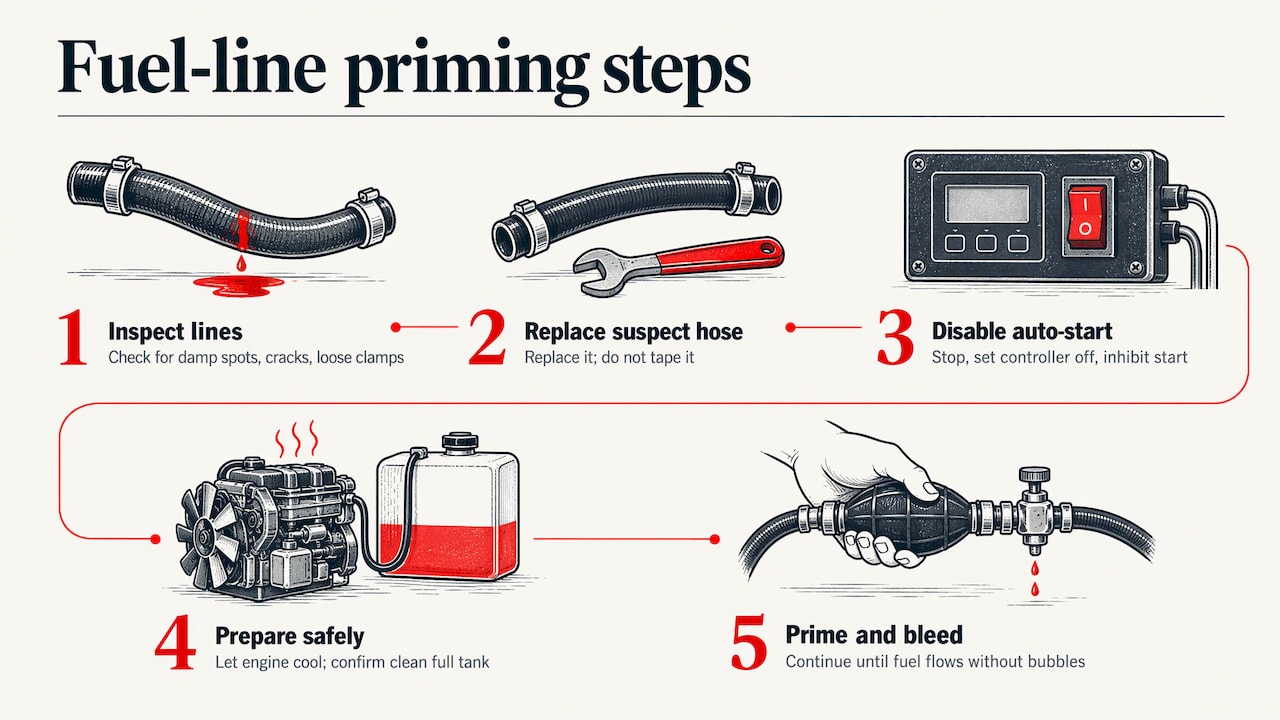
4. Trace the lines and prime the system

5. Test the lift pump

If filters are new, lines are sound and the engine still starves, test the lift pump. Disconnect the outlet line into a container and crank briefly: you want a steady, pulsing flow. Weak or no flow with a good supply points to the pump. A lift pump failure is a documented cause of an engine that slows and stops.

6. Consider the injection pump and nozzles

Last, and only after everything upstream checks out, look at the injection pump and injector nozzles. Wear in these parts causes hard starting, rough running, black smoke and higher fuel consumption. The same service manual attributes increased fuel consumption and hard starting to wear of the injection pump and nozzles, excessive injection and improper timing, as well as to worn cylinders or piston rings.

This matters for the fuel use question. Before blaming the fuel supply for a thirsty set, check load, timing and injector condition, because those, not a leak, are the typical fuel-system reasons for high consumption.

Stale and contaminated fuel: the standby problem

Diesel starts to oxidize once it is refined. A risk-engineering bulletin from an insurer states that its shelf life is typically 6 to 12 months under normal temperature and humidity, and that it can drift out of specification within weeks of production.

That makes standby generators the most exposed. A set that only runs a short test each month can hold the same fuel for a year or more and show the problem only on the day it has to carry load.

The same publication gives a prevention routine that works for any stationary tank:

  • Test the fuel to the ASTM D975 diesel standard at first fill and at least once a year.
  • Keep the tank at least two-thirds full to limit condensation.
  • Reserve around 5% of the tank volume as a sump and drain it at least annually.
  • Seal vents and ports against moisture and debris.
  • Clean the strainer or dirt leg every quarter.

Water is the enabler of microbial growth, the “diesel bug” that forms the black sludge in filters. Check the tank bottom for water on a regular schedule and fix the entry point, whether it is a cap, a vent or a cracked fill pipe.

One point on fuel specification: use the grade the manual calls for. Some service manuals specify No. 2 diesel to ASTM 2-D with a minimum cetane number. Fuel outside specification can cause hard starting or poor load holding.

Fuel problems on small gasoline sets

This article is aimed at diesel engines, but crews often service portable gasoline sets too. The pattern there is simpler: stale fuel, a gummed carburetor, a half-closed fuel valve, a clogged filter or a failed pump. The correction for stale fuel is to drain the tank and carburetor and refill with fresh fuel before replacing parts. Running the carburetor dry before storage prevents most repeat visits.

When the set is on a boat, a farm or a job site

The fuel faults are the same, but the causes shift with the application.

  • Marine: water ingress and condensation, long idle periods in marinas, and vibration that works hoses and clamps loose. Check the separator before every season.
  • Agriculture: dust, drums and transfer cans that introduce dirt, and irrigation or grain-drying sets that sit unused between seasons.
  • Construction and rental: fuel of mixed age from site tanks, hard use, and sets returning from hire with unknown fuel history. Drain a bottom sample before reuse.
  • Standby and emergency power: long storage, infrequent runs, and the cost of a failure at the worst moment.
  • Material handling and compact equipment: small tanks, frequent refueling and filter loading from dirty fuel.

For a fleet, the cheapest improvement is a written inspection routine: fuel sample, filter condition and hose check recorded at each service, so patterns show up before a breakdown does.

Checking electrical and mechanical fuel components

Many starts-then-stops faults sit in the electrical side of the fuel system: the solenoid, relay, fuses and the wiring between them. Test for supply voltage at the solenoid while cranking and check coil resistance against the manual’s figure. When you are sourcing test gear or replacement electrical items, an industrial equipment marketplace with utilities and power system equipment listings can help you locate what you need.

Which parts usually need replacing

In real service work, fuel problems tend to end with a short list of items:

Part Typical reason to replace
Primary and secondary fuel filters Restriction, contamination, scheduled service
Water separator and bowl Water or sludge present
Filter seals and O-rings Air ingress after filter change
Fuel hoses and clamps Cracking, softening, damp spots
Lift pump Weak or no flow with a clean supply
Fuel solenoid or relay No click, no voltage, burnt coil
Injector nozzles Black smoke, rough running, high consumption
Injection pump Hard starting after upstream faults are cleared

Two habits cut repeat failures. Replace filters as a set with new seals, and stock the common consumables for each engine model you service so a fuel fault does not turn into a waiting period.

Perspective

Most of the fuel faults we hear about are not exotic. They are a filter that was the wrong one, a seal that was reused, or a part that was close to the right one but not the right one. Then the set sits while someone works out what went wrong.

Our focus is Yanmar and Sensei engines and equipment, and the applications they live in: construction, agriculture, marine, power generation, material handling and compact equipment. Knowing the application matters because the same engine family is fitted differently in a genset, a tractor or a boat, and the correct fuel filter, pump or injector depends on that.

That is why we put so much weight on identifying the right part quickly and keeping a broad stock for rapid dispatch. For a workshop or a fleet, the real cost of a fuel problem is the hours of downtime, and the best way to cut them is to diagnose fast, fit the correct part once, and get the set back on load.

A good routine plus the right parts on the shelf beats heroic troubleshooting every time.

Duarte

Getting the right part for your Yanmar or Sensei engine

If your diagnosis ends at a filter, hose, pump, solenoid or injector on a Yanmar or Sensei engine, we supply parts for these engines across construction and industry, agriculture, marine, power and generators, material handling and compact equipment. We focus on identifying the correct application-specific component and keep extensive inventory for rapid dispatch, so you spend less time waiting and less time returning the wrong item.

Iberspares

Browse the range at Iberspares genuine Yanmar and Sensei parts, or start from the main store and pick your sector. Have the engine model and serial number ready when you order.

FAQ

How long before diesel goes bad in a generator?

Diesel typically lasts about 6 to 12 months under normal temperature and humidity, and it can be out of specification within weeks of production. Keeping the tank mostly full, draining the sump and testing the fuel annually extend its useful life. Gasoline with ethanol goes stale much faster, so small sets need fresh fuel or a stabilizer.

Why does my generator start and then stall?

The usual fuel-side causes are no fuel in the tank, a restricted filter or supply line, a lift pump fault, a leak, or a solenoid circuit fault. Check the filters and water separator first, then confirm the solenoid is energized and the lines are airtight. If the fuel supply checks out, look at the injectors and injection pump.

Why is my generator using so much fuel?

Higher consumption is typically tied to load, worn injectors or injection pump parts, improper injection timing, or engine wear such as worn cylinders or piston rings. A fuel leak is also possible, so check the lines and fittings for damp spots. Compare the actual load with the set’s rating before you start replacing parts.

How do I get air out of a diesel generator fuel system?

Stop the engine, let it cool, and on sets with an auto-start controller put it in off and use the start inhibit function so it cannot start unexpectedly. Make sure the tank has clean fuel, then prime with the hand pump or the controller’s prime function and open the bleed screw until fuel flows without bubbles. If air returns, look for a loose fitting, a worn seal or a cracked hose on the supply side.

Sources

Content strategy and optimisation for Google and AI-powered search platforms by Velveteen SaaS — specialists in online visibility and customer acquisition.
Posted on

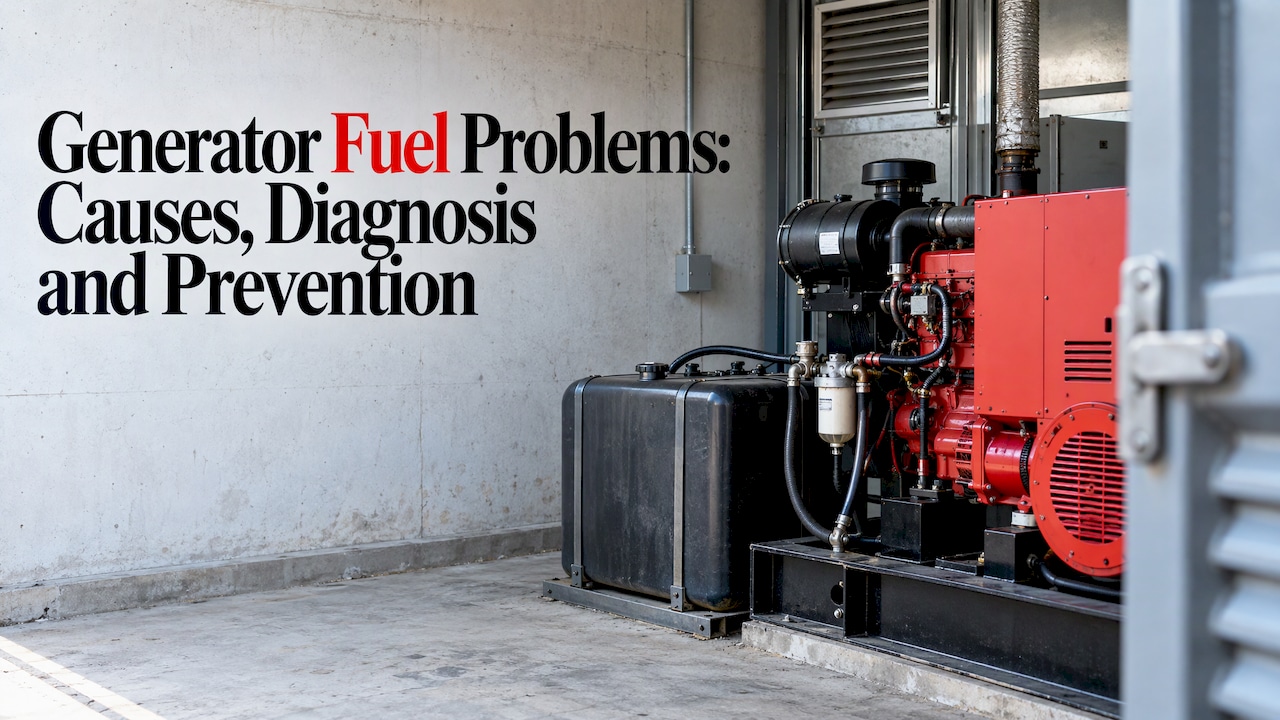
Generator Fuel Problems: Causes, Diagnosis and Prevention

Diesel generator fuel system in service enclosure

Most generator fuel problems come down to five faults: no fuel at the pump, air in the lines, a blocked filter, contaminated or degraded fuel, or a failed shut-off device. Work from the tank towards the injectors and you will usually find the fault in order. This guide shows you the sequence, the symptoms each fault produces, and the storage habits that stop it coming back. It is written for diesel sets first, with a short section for petrol units.

Iberspares

Find the Right Generator Parts

Iberspares supplies genuine Yanmar and Sensei parts, including fuel-system components, for power generation applications across Europe.

Explore Yanmar and Sensei parts

TL;DR

  • Hard starting, loss of power under load, hunting speed and smoke are the typical signs of a fuel-system fault.

  • Check the simple things first: tank contents, fuel valve position, then the filter, then suction-side joints for air.

  • Diesel degrades in storage, and water, microbial growth and cold-weather wax can all choke the filter.

  • Keep tanks topped up, inspect filters regularly and hold spare filters on site.

  • Always identify your exact engine model, serial number and part reference before ordering any replacement part.

Table of Contents

Symptoms that point to the fuel system

A diesel generator with a fuel fault rarely fails in one clear way. The usual presentations are:

  • Cranks but does not start: fuel is not reaching the injection pump, or air has displaced it.

  • Starts, then stalls: a partly blocked filter or a leaking suction joint lets the engine run briefly on what is in the lines.

  • Loses power under load: the supply cannot keep up with demand, which often means a restricted filter.

  • Hunting or unstable speed: air in the system or contaminated fuel is a frequent cause.

  • Smoke: can point to poor fuel quality or an injection problem further down the line.

None of these proves a fuel fault on its own. Battery, air intake and governor faults can look similar. But if the fuel side is cheap to check, check it first.

A step-by-step check from tank to injectors

Stop the set, make it safe and let the engine cool before you touch anything. Follow the engine manufacturer’s instructions for your model, and use a qualified technician for work on the high-pressure side of the injection system, where pressures can injure.

  1. Tank contents. Confirm the level with a dipstick or sight gauge, not just the dashboard gauge. Check for water or sludge at the bottom through the drain point if one is fitted.

  2. Fuel valve and shut-off solenoid. A closed valve is an embarrassing but common cause. If the valve is open and the engine still gets nothing, check whether the shut-off solenoid is energising and moving as it should.

  3. Primary filter and water separator. Look for water in the bowl, discolouration and clogging. Where a vacuum gauge is fitted on the primary filter, it shows how hard the lift pump is working. Marine engineer Steve D’Antonio compares running without one to flying blind, since it also tells you when the filter needs changing.

  4. Suction-side joints and hoses. Air is the classic low-pressure fuel fault. Look for loose unions, perished or hardened hoses, cracked filter housings and worn lift-pump seals on the suction side. A weep of fuel or a stream of bubbles in a clear line is a giveaway.

  5. Lift pump delivery. Confirm the pump delivers fuel when operated. Where the engine has pressure test points, record the readings and compare them with the figures in the manufacturer’s documentation. Do not rely on remembered values.

  6. Bleeding. After any filter change or repair, bleed the system exactly as the manufacturer’s manual describes. Procedures differ between engine families, so follow the document for your model.

If you reach the injection pump and injectors without finding the cause, stop and call a qualified diesel technician.

Air in the fuel lines

Air causes more stubborn starting trouble than most owners expect. Once a bubble sits in the system, the pump compresses it instead of moving fuel, so the engine cranks without firing.

Common entry points:

  • Filter housings that were not seated properly after a change

  • Dried-out or cracked O-rings and seals

  • Rubber hose that has hardened with age and heat

  • Fittings loosened by vibration, which is constant on any generator set

The fix is to find and cure the leak, then bleed. Bleeding alone only buys time if the joint still draws air.

Contaminated, degraded or cold diesel

Diesel is not a permanent product. The US Department of Energy notes that diesel naturally deteriorates over 1 to 3 years even in a clean tank, and lists organic growth, condensation and poor-quality delivered fuel among the causes of contamination.

A filter manufacturers’ council guide lists the usual culprits behind diesel contamination and filter plugging:

  • Water

  • Fungus and bacteria

  • Wax crystals forming below the cloud point

  • Asphaltenes

  • Sediment and other solids

These can enter during handling and storage, not only from the supplier.

Water and microbial growth

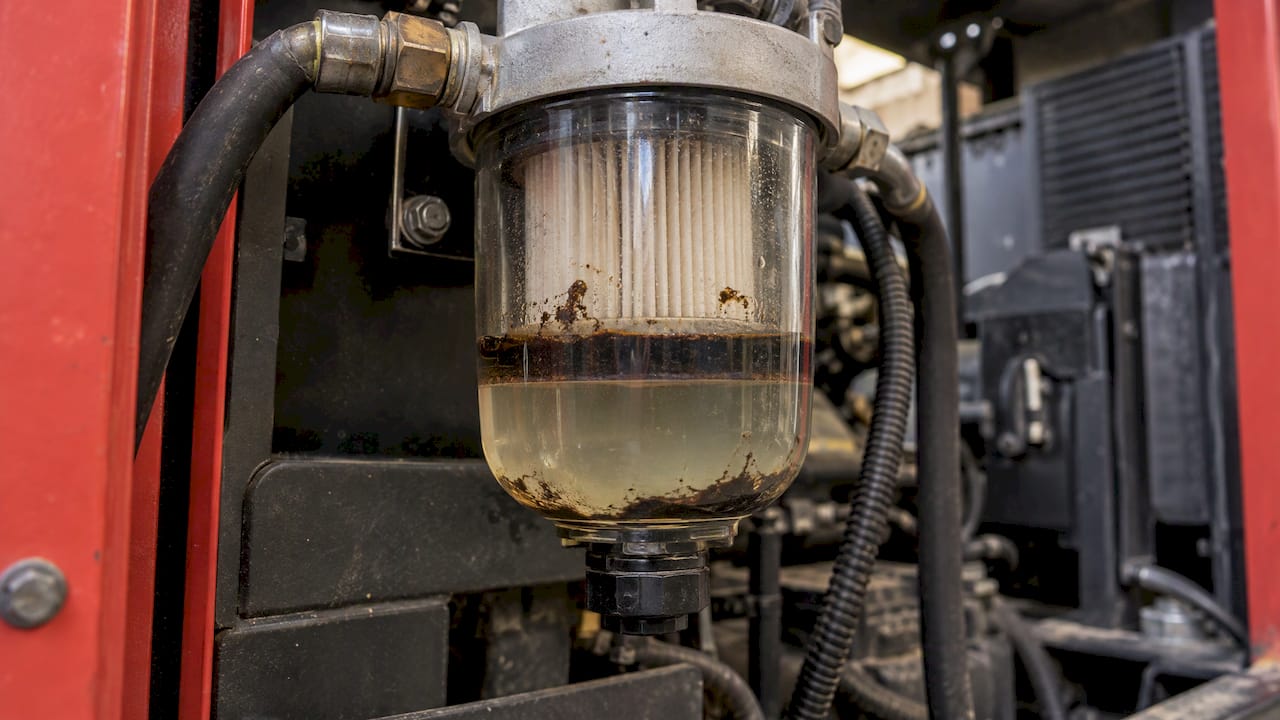
Condensation forms inside part-empty tanks as temperatures change. Water at the bottom of the tank feeds microbial growth, which produces sludge that blocks filters quickly. If you find slime or dark sediment in a filter bowl, the tank needs attention as well as the filter.

Water and dark sludge in a diesel filter bowl

Cold weather and wax

Standing sets in unheated plant rooms, farm buildings or boatyards face cold nights. Wax precipitates out of diesel below its cloud point and clogs filters. The same guide recommends fuel with a cloud point at least 12°C (22°F) below the lowest outside temperature expected. Ask your fuel supplier for winter-grade product ahead of the cold season.

Quick comparison: fault, sign and first check

Fault

Typical sign

First check

Empty tank or closed valve

Cranks, never fires

Tank level, valve position

Blocked filter

Power loss under load, stalling

Filter and water bowl condition

Air in lines

Hard starting, hunting

Suction-side joints, hoses, seals

Failed shut-off solenoid

No fuel despite full tank

Solenoid operation and wiring

Contaminated fuel

Repeated filter blockage, smoke

Tank bottom sample, fuel age

Waxed fuel in cold

Fails in cold weather only

Fuel grade against temperature

Petrol generators: when there is fuel but no start

Petrol units add the carburettor to the list. Fuel left in the bowl turns to varnish and can block the small idle passages, which causes hunting, surging or refusal to start. Fuel valve, fuel age and carburettor cleanliness are the places to look. Cleaning small jets needs care, and persistent surging usually means a proper strip-down by a competent workshop.

How long can fuel sit in a generator?

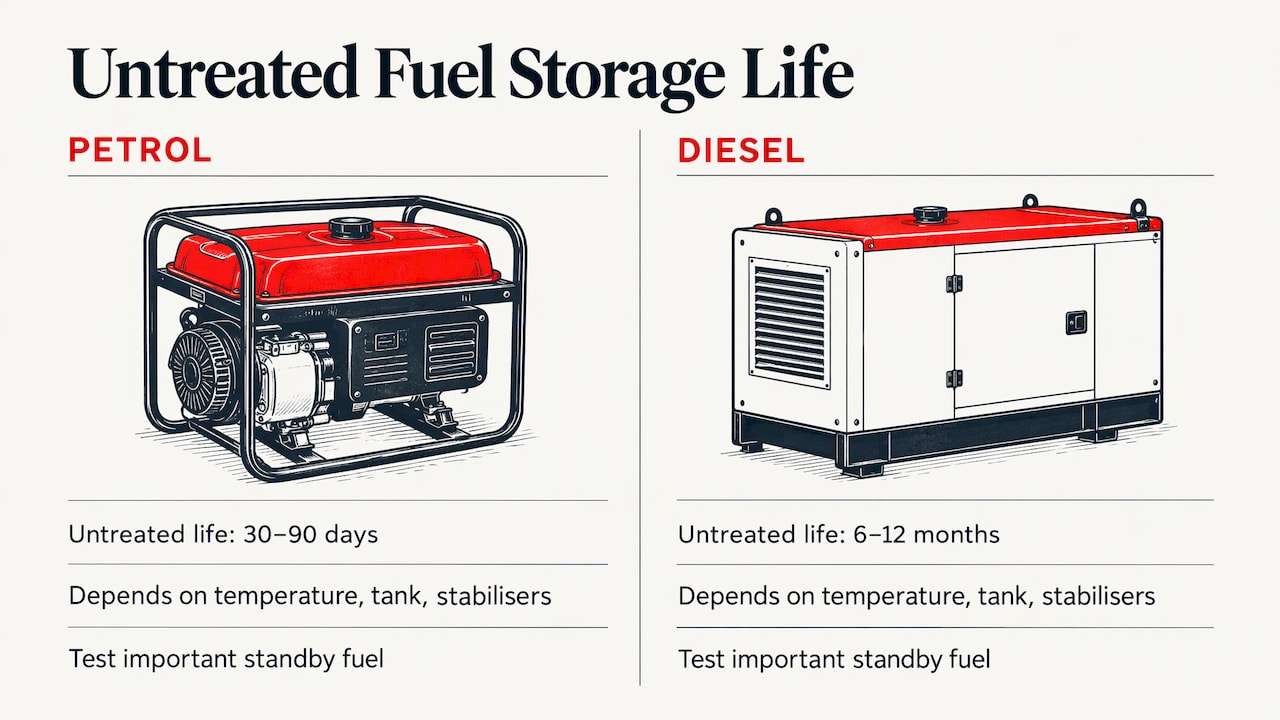
Storage life depends on temperature, tank design and whether stabilisers were used. One fuel-treatment specialist suggests that untreated petrol can become unreliable within 30 to 90 days, and untreated diesel after 6 to 12 months. Treat those as rough guides, and for a standby set that matters, test the fuel rather than guess.

Rough storage-life ranges for untreated petrol and diesel

Preventing generator fuel problems

The US Department of Energy’s maintenance guidance for generator systems recommends a short list of habits, all of them practical for any site:

  • Keep the tank topped off to limit condensation

  • Send fuel for laboratory analysis annually

  • Inspect tanks and filters regularly

  • Polish the fuel annually, or continuously on critical installations

  • Hold spare filters on site

Fuel polishing removes water, particles and microbial contamination without draining the tank. Run the set under load periodically too, so fuel circulates and the filters are tested before an outage does it for you.

Before you order replacement parts

Fuel-system parts are matched closely to the engine. Filters, lift pumps, seals, hoses and solenoids differ between engine families and even between production runs, so a part that looks right can still be wrong.

Before ordering, gather:

  • The exact engine or generator model

  • The serial number from the engine plate

  • The part reference from the manual, parts catalogue or the old component

  • Photos of the part and its fittings

Use genuine manufacturer parts where the engine maker specifies them. Aftermarket or compatible items are not genuine OEM parts, and we never describe them as such.

Our perspective

Fuel faults look like engine faults, and engines get blamed for them. In our experience of supplying genuine Yanmar and Sensei parts to operators in Portugal, Spain and across Europe, many repeat problems come from a mismatched or worn component in the fuel path: a filter that is not the specified one, a seal that has aged, a lift pump that has lost delivery.

That is why we put identification first. Give us the engine model, serial number and part reference and we help you confirm the right genuine part before you order. For a set that has to start when the power fails, the right filter and seals are cheap insurance.

Follow the maintenance schedule in the manufacturer’s documentation for your engine, and keep spare filters on the shelf.

Iberspares

Finding the right Yanmar or Sensei fuel-system parts

If your diagnosis points to a filter, pump, seal or hose on a Yanmar or Sensei engine, we supply genuine parts for power generation, marine, agricultural, construction, material handling and compact equipment applications. Browse the range at iberspares.com or go straight to the online shop.

Not sure which reference you need? Email [email protected] with your engine model, serial number and a photo of the part, and we will help you identify it.

Summary

Trace the fault from the tank to the injectors: contents, valve, filter, air leaks, lift pump, then the injection side with a qualified technician. Protect the fuel with topped-up tanks, regular inspection, polishing and the right winter grade. Then order the exact genuine part for your engine. Visit shop.iberspares.com to find or request genuine Yanmar and Sensei spare parts.

FAQ

Why is my diesel generator cranking but not starting?

The usual causes are no fuel reaching the engine, a closed fuel valve, air in the lines, a blocked filter or a failed shut-off solenoid. Check the tank level and valve first, then the filter and suction-side joints. If these are fine, ask a qualified technician to check the injection side.

Why is fuel not reaching my engine?

Look for an empty tank, a closed valve, an air lock, a clogged filter or a solenoid that is not opening. Air entering through a loose union or perished hose is common. Fix the leak before you bleed the system.

Can I use old diesel in a generator?

Diesel deteriorates over time, and the US Department of Energy puts natural deterioration at 1 to 3 years in a clean tank. Old fuel with water or growth blocks filters. Have questionable fuel tested and treated or replaced before running the set.

Why does my generator only fail in cold weather?

Wax crystals form in diesel below its cloud point and plug the filter. Use fuel with a cloud point well below the lowest expected temperature, and ask your supplier for the right grade for the season.

Sources

Content strategy and optimisation for Google and AI-powered search platforms by Velveteen SaaS — specialists in online visibility and customer acquisition.
Posted on

Generator Fuel Problems: Causes, Diagnosis and Prevention

Diesel generator fuel system in service enclosure

Most generator fuel problems come down to five faults: no fuel at the pump, air in the lines, a blocked filter, contaminated or degraded fuel, or a failed shut-off device. Work from the tank towards the injectors and you will usually find the fault in order. This guide shows you the sequence, the symptoms each fault produces, and the storage habits that stop it coming back. It is written for diesel sets first, with a short section for petrol units.

Iberspares

Find the Right Generator Parts

Iberspares supplies genuine Yanmar and Sensei parts, including fuel-system components, for power generation applications across Europe.

Explore Yanmar and Sensei parts

TL;DR

  • Hard starting, loss of power under load, hunting speed and smoke are the typical signs of a fuel-system fault.

  • Check the simple things first: tank contents, fuel valve position, then the filter, then suction-side joints for air.

  • Diesel degrades in storage, and water, microbial growth and cold-weather wax can all choke the filter.

  • Keep tanks topped up, inspect filters regularly and hold spare filters on site.

  • Always identify your exact engine model, serial number and part reference before ordering any replacement part.

Table of Contents

Symptoms that point to the fuel system

A diesel generator with a fuel fault rarely fails in one clear way. The usual presentations are:

  • Cranks but does not start: fuel is not reaching the injection pump, or air has displaced it.

  • Starts, then stalls: a partly blocked filter or a leaking suction joint lets the engine run briefly on what is in the lines.

  • Loses power under load: the supply cannot keep up with demand, which often means a restricted filter.

  • Hunting or unstable speed: air in the system or contaminated fuel is a frequent cause.

  • Smoke: can point to poor fuel quality or an injection problem further down the line.

None of these proves a fuel fault on its own. Battery, air intake and governor faults can look similar. But if the fuel side is cheap to check, check it first.

A step-by-step check from tank to injectors

Stop the set, make it safe and let the engine cool before you touch anything. Follow the engine manufacturer’s instructions for your model, and use a qualified technician for work on the high-pressure side of the injection system, where pressures can injure.

  1. Tank contents. Confirm the level with a dipstick or sight gauge, not just the dashboard gauge. Check for water or sludge at the bottom through the drain point if one is fitted.

  2. Fuel valve and shut-off solenoid. A closed valve is an embarrassing but common cause. If the valve is open and the engine still gets nothing, check whether the shut-off solenoid is energising and moving as it should.

  3. Primary filter and water separator. Look for water in the bowl, discolouration and clogging. Where a vacuum gauge is fitted on the primary filter, it shows how hard the lift pump is working. Marine engineer Steve D’Antonio compares running without one to flying blind, since it also tells you when the filter needs changing.

  4. Suction-side joints and hoses. Air is the classic low-pressure fuel fault. Look for loose unions, perished or hardened hoses, cracked filter housings and worn lift-pump seals on the suction side. A weep of fuel or a stream of bubbles in a clear line is a giveaway.

  5. Lift pump delivery. Confirm the pump delivers fuel when operated. Where the engine has pressure test points, record the readings and compare them with the figures in the manufacturer’s documentation. Do not rely on remembered values.

  6. Bleeding. After any filter change or repair, bleed the system exactly as the manufacturer’s manual describes. Procedures differ between engine families, so follow the document for your model.

If you reach the injection pump and injectors without finding the cause, stop and call a qualified diesel technician.

Air in the fuel lines

Air causes more stubborn starting trouble than most owners expect. Once a bubble sits in the system, the pump compresses it instead of moving fuel, so the engine cranks without firing.

Common entry points:

  • Filter housings that were not seated properly after a change

  • Dried-out or cracked O-rings and seals

  • Rubber hose that has hardened with age and heat

  • Fittings loosened by vibration, which is constant on any generator set

The fix is to find and cure the leak, then bleed. Bleeding alone only buys time if the joint still draws air.

Contaminated, degraded or cold diesel

Diesel is not a permanent product. The US Department of Energy notes that diesel naturally deteriorates over 1 to 3 years even in a clean tank, and lists organic growth, condensation and poor-quality delivered fuel among the causes of contamination.

A filter manufacturers’ council guide lists the usual culprits behind diesel contamination and filter plugging:

  • Water

  • Fungus and bacteria

  • Wax crystals forming below the cloud point

  • Asphaltenes

  • Sediment and other solids

These can enter during handling and storage, not only from the supplier.

Water and microbial growth

Condensation forms inside part-empty tanks as temperatures change. Water at the bottom of the tank feeds microbial growth, which produces sludge that blocks filters quickly. If you find slime or dark sediment in a filter bowl, the tank needs attention as well as the filter.

Water and dark sludge in a diesel filter bowl

Cold weather and wax

Standing sets in unheated plant rooms, farm buildings or boatyards face cold nights. Wax precipitates out of diesel below its cloud point and clogs filters. The same guide recommends fuel with a cloud point at least 12°C (22°F) below the lowest outside temperature expected. Ask your fuel supplier for winter-grade product ahead of the cold season.

Quick comparison: fault, sign and first check

Fault

Typical sign

First check

Empty tank or closed valve

Cranks, never fires

Tank level, valve position

Blocked filter

Power loss under load, stalling

Filter and water bowl condition

Air in lines

Hard starting, hunting

Suction-side joints, hoses, seals

Failed shut-off solenoid

No fuel despite full tank

Solenoid operation and wiring

Contaminated fuel

Repeated filter blockage, smoke

Tank bottom sample, fuel age

Waxed fuel in cold

Fails in cold weather only

Fuel grade against temperature

Petrol generators: when there is fuel but no start

Petrol units add the carburettor to the list. Fuel left in the bowl turns to varnish and can block the small idle passages, which causes hunting, surging or refusal to start. Fuel valve, fuel age and carburettor cleanliness are the places to look. Cleaning small jets needs care, and persistent surging usually means a proper strip-down by a competent workshop.

How long can fuel sit in a generator?

Storage life depends on temperature, tank design and whether stabilisers were used. One fuel-treatment specialist suggests that untreated petrol can become unreliable within 30 to 90 days, and untreated diesel after 6 to 12 months. Treat those as rough guides, and for a standby set that matters, test the fuel rather than guess.

Rough storage-life ranges for untreated petrol and diesel

Preventing generator fuel problems

The US Department of Energy’s maintenance guidance for generator systems recommends a short list of habits, all of them practical for any site:

  • Keep the tank topped off to limit condensation

  • Send fuel for laboratory analysis annually

  • Inspect tanks and filters regularly

  • Polish the fuel annually, or continuously on critical installations

  • Hold spare filters on site

Fuel polishing removes water, particles and microbial contamination without draining the tank. Run the set under load periodically too, so fuel circulates and the filters are tested before an outage does it for you.

Before you order replacement parts

Fuel-system parts are matched closely to the engine. Filters, lift pumps, seals, hoses and solenoids differ between engine families and even between production runs, so a part that looks right can still be wrong.

Before ordering, gather:

  • The exact engine or generator model

  • The serial number from the engine plate

  • The part reference from the manual, parts catalogue or the old component

  • Photos of the part and its fittings

Use genuine manufacturer parts where the engine maker specifies them. Aftermarket or compatible items are not genuine OEM parts, and we never describe them as such.

Our perspective

Fuel faults look like engine faults, and engines get blamed for them. In our experience of supplying genuine Yanmar and Sensei parts to operators in Portugal, Spain and across Europe, many repeat problems come from a mismatched or worn component in the fuel path: a filter that is not the specified one, a seal that has aged, a lift pump that has lost delivery.

That is why we put identification first. Give us the engine model, serial number and part reference and we help you confirm the right genuine part before you order. For a set that has to start when the power fails, the right filter and seals are cheap insurance.

Follow the maintenance schedule in the manufacturer’s documentation for your engine, and keep spare filters on the shelf.

Iberspares

Finding the right Yanmar or Sensei fuel-system parts

If your diagnosis points to a filter, pump, seal or hose on a Yanmar or Sensei engine, we supply genuine parts for power generation, marine, agricultural, construction, material handling and compact equipment applications. Browse the range at Iberspares or go straight to the online shop.

Not sure which reference you need? Email [email protected] with your engine model, serial number and a photo of the part, and we will help you identify it.

Summary

Trace the fault from the tank to the injectors: contents, valve, filter, air leaks, lift pump, then the injection side with a qualified technician. Protect the fuel with topped-up tanks, regular inspection, polishing and the right winter grade. Then order the exact genuine part for your engine. Visit shop.iberspares.com to find or request genuine Yanmar and Sensei spare parts.

FAQ

Why is my diesel generator cranking but not starting?

The usual causes are no fuel reaching the engine, a closed fuel valve, air in the lines, a blocked filter or a failed shut-off solenoid. Check the tank level and valve first, then the filter and suction-side joints. If these are fine, ask a qualified technician to check the injection side.

Why is fuel not reaching my engine?

Look for an empty tank, a closed valve, an air lock, a clogged filter or a solenoid that is not opening. Air entering through a loose union or perished hose is common. Fix the leak before you bleed the system.

Can I use old diesel in a generator?

Diesel deteriorates over time, and the US Department of Energy puts natural deterioration at 1 to 3 years in a clean tank. Old fuel with water or growth blocks filters. Have questionable fuel tested and treated or replaced before running the set.

Why does my generator only fail in cold weather?

Wax crystals form in diesel below its cloud point and plug the filter. Use fuel with a cloud point well below the lowest expected temperature, and ask your supplier for the right grade for the season.

Sources

Content strategy and optimisation for Google and AI-powered search platforms by Velveteen SaaS — specialists in online visibility and customer acquisition.